UK Minister Insists Transatlantic Partnership Remains Strong Despite Trump's Public Criticism
In the wake of public criticism from US President Donald Trump, UK Cabinet minister Darren Jones has firmly defended the strength of the transatlantic partnership, asserting that operational cooperation between the two nations remains robust despite political tensions over the Iran conflict.
Trump's Public Critique of UK-US Relations
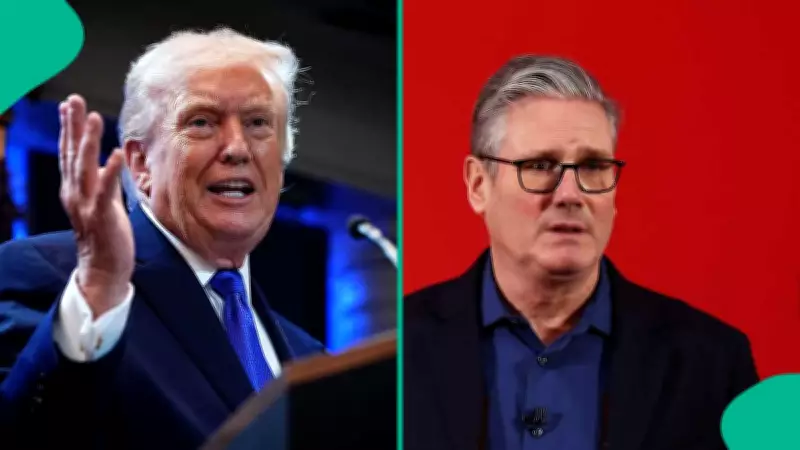
President Donald Trump delivered pointed criticism of the UK-US relationship in an interview with The Sun newspaper on Tuesday, March 2, 2026, stating it was "very sad to see that the relationship is obviously not what it was." The American leader specifically criticized Prime Minister Sir Keir Starmer, claiming he had "not been helpful" and describing the current dynamic as "a much different kind of relationship that we've had with your country before."
Trump's comments came after Britain declined to participate in the initial US-Israeli strikes against Iran that occurred on Saturday, February 28, 2026. Those strikes resulted in the death of Supreme Leader Ayatollah Ali Khamenei and other senior Iranian figures, prompting retaliatory attacks from Iran targeting multiple Middle Eastern nations and shipping lanes.

UK Minister's Firm Defense of Operational Cooperation
Darren Jones, serving as chief secretary to the prime minister, responded directly to Trump's criticism by emphasizing the continued strength of UK-US military and intelligence collaboration. "Operationally, the relationship is the same," Jones stated, pointing to concrete examples of ongoing cooperation.
The minister highlighted several key areas where British forces continue to support American operations:
- British fighter jets providing support to US forces throughout the Middle East region
- Continued intelligence sharing between the two nations' security agencies
- Ongoing trade collaboration and economic partnership
- Later agreement to allow US forces access to British bases for defensive strikes
When questioned about the legality of American actions in Iran, Jones maintained diplomatic restraint, stating: "It's not for me to comment on the legal basis of actions taken by other countries. That's for the Americans to explain and for any international court that they recognize to come to a judgment."
Starmer's Decision Grounded in Iraq War Lessons
Prime Minister Sir Keir Starmer defended his initial refusal to join the US-led strikes during a parliamentary address on Monday, March 1, 2026. The British leader articulated a clear philosophical approach to military intervention, stating that the UK government "does not believe in regime change from the skies."
Starmer explicitly cited the "lessons of Iraq" as guiding his decision-making process, emphasizing the importance of establishing a lawful basis for military action and ensuring clear, achievable objectives before committing British forces. "That is the principle that I applied to the decisions that I made over the weekend," he told Members of Parliament.
The prime minister's position evolved following Iranian retaliatory attacks that specifically targeted UK citizens and interests. In response to these developments, Starmer authorized the use of British bases for what he characterized as "defensive" strikes against Iranian capabilities.
Political Context and Domestic Pressures
The diplomatic tension occurs against a challenging political backdrop for Prime Minister Starmer, who recently suffered a significant parliamentary setback with the loss of a Greater Manchester by-election to the Green Party. President Trump appeared to reference these domestic difficulties, suggesting the prime minister "has got his own difficulties" and hinting that Starmer's stance on Iran might be influenced by internal political considerations.

Meanwhile, the United States' objectives in Iran have appeared somewhat fluid. President Trump initially described the mission as defending American citizens by "eliminating imminent threats from the Iranian regime," but later expanded the stated goals to include destroying Iran's missile and naval capabilities, preventing nuclear development, and weakening Tehran's support for proxy groups throughout the region.
Despite the public diplomatic friction, Minister Jones' statements underscore the complex reality of international alliances where operational cooperation often continues uninterrupted even amid political disagreements. The UK's measured approach reflects both historical lessons from previous conflicts and current strategic calculations about Middle Eastern stability.