The United States has sharply criticised China's recent military exercises around Taiwan, labelling them a provocative act that unnecessarily escalates regional tensions. The statement from the US State Department calls for Beijing to halt its military pressure and engage in meaningful dialogue instead.
Washington's Call for Restraint
On Thursday, January 2, 2026, State Department spokesman Tommy Pigott issued a firm response to the war games conducted by China on Monday and Tuesday. "China's military activities and rhetoric toward Taiwan and others in the region increase tensions unnecessarily," Pigott stated. He explicitly urged Beijing to "exercise restraint, cease its military pressure against Taiwan, and instead engage in meaningful dialogue."
The US position remains anchored in supporting stability. "The United States supports peace and stability across the Taiwan Strait and opposes unilateral changes to the status quo, including by force or coercion," Pigott affirmed, reiterating a long-standing policy.

Scale and Purpose of the Chinese Drills
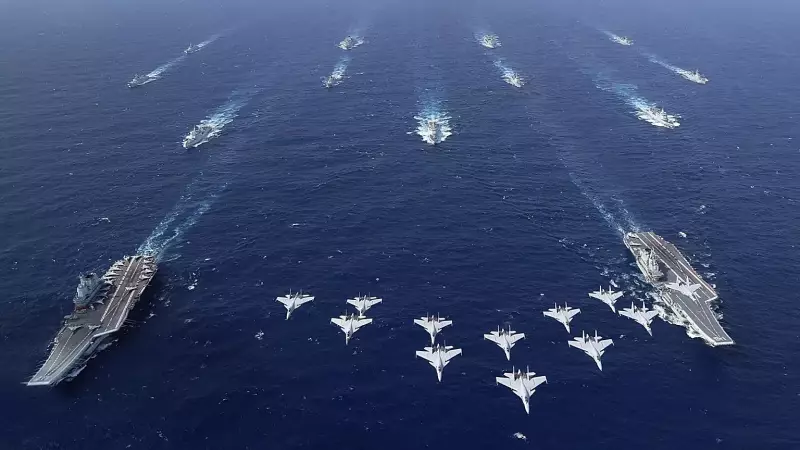
Beijing's show of force was significant in scale. The People's Liberation Army launched missiles and deployed dozens of fighter jets, navy ships, and coastguard vessels in operations designed to encircle Taiwan. Chinese authorities stated the drills simulated a blockade of the self-ruled island's main ports, a move Taipei condemned as "highly provocative."
This latest round of manoeuvres marks the sixth major military exercise since 2022, a period of heightened activity that began after a visit to Taiwan by then-US House Speaker Nancy Pelosi. China, which claims democratic Taiwan as part of its territory, has never renounced the use of force to achieve what it calls reunification.
International Reactions and Beijing's Defence
In response to international calls for restraint, including from the US, China's defence ministry defended the drills on Friday as "legitimate". A ministry spokesman warned other countries to "stop stirring up trouble on the Taiwan Strait issue" and urged them to strictly abide by the one-China principle.
The timing of the exercises is notable, coming after the Trump administration approved an $11 billion arms package for Taiwan. For decades, the US has been committed to ensuring Taiwan's self-defence capabilities, while maintaining strategic ambiguity on whether American forces would directly intervene in a conflict.
When asked about the live-fire drills, US President Donald Trump downplayed concerns on Monday. "I have a great relationship with President Xi. And he hasn't told me anything about it," Trump told reporters. "I don't believe he's going to be doing it," he added, apparently referring to a potential invasion. This stance appears to contrast with the more urgent tone of the State Department's formal statement.