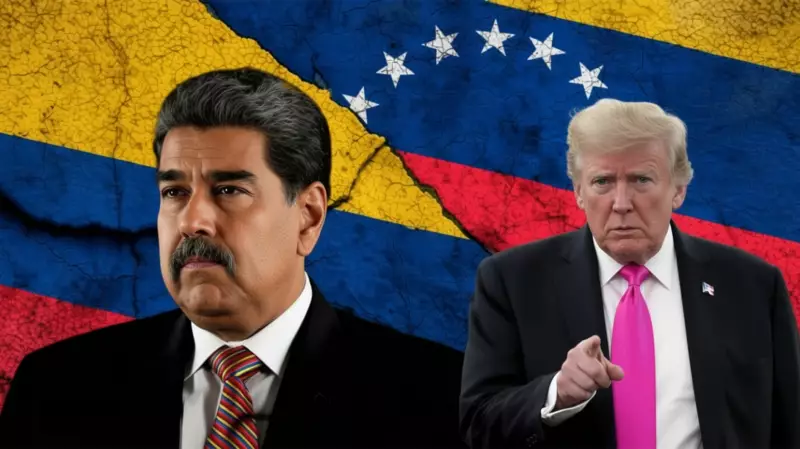
In a dramatic escalation of tensions, former US President Donald Trump has declared that the United States will take control of Venezuela following a military operation that captured the country's leader, Nicolas Maduro. The raid, which involved heavy airstrikes on the capital, Caracas, has sent shockwaves across the globe.
Operation Details: Airstrikes, Blackout, and Capture
The operation unfolded in the early hours of Saturday, January 3, 2026. Residents of Caracas reported being jolted awake around 2:00 am local time by powerful explosions and the sound of military helicopters. US airstrikes targeted a major military base, an airbase, and other strategic sites for nearly an hour.
Trump stated the mission began with a partial nationwide blackout, achieved through US "expertise." General Dan Caine, Chairman of the US Joint Chiefs of Staff, revealed that approximately 150 aircraft supported the operation. Special forces troops flew in by helicopter to seize Maduro and his wife at their location, a move based on months of intelligence gathering on the president's routines.

Maduro, 63, and his wife "gave up" without resistance, leading to no loss of US life, according to General Caine. The former Venezuelan leader was later shown in an image posted by Trump, blindfolded and handcuffed aboard a US naval vessel. He and his wife are now being transferred to New York to face narcotics and terrorism charges.
Trump's Vision: Running Venezuela and Controlling Its Oil
Speaking to reporters in Florida, Trump left little doubt about the operation's objectives. "We're going to be running it with a group," he said, referring to Venezuela. He indicated that senior members of his cabinet would be designated to oversee the process and confirmed the US was prepared to deploy ground troops, stating, "We are not afraid of boots on the ground."
A central aim, as articulated by Trump, is gaining access to Venezuela's vast oil reserves. "We're going to have our very large United States oil companies... go in, spend billions of dollars, fix the badly broken infrastructure," he said. "We'll be selling large amounts of oil." He also suggested the US presence would be long-term, lasting until a "proper transition" could occur.
In a surprising move, Trump dismissed the US-backed opposition figure Maria Corina Machado, a Nobel Peace Prize laureate, as a potential leader, claiming she lacked support. Instead, he hinted at working with Maduro's deputy, Delcy Rodríguez, saying she was willing to do what is "necessary to make Venezuela great again."
Global Condemnation and Shifting Justifications
The military intervention has provoked swift international criticism. The United Nations Secretary-General expressed deep concern that international law rules were not respected. China, a key ally of Maduro's government, strongly condemned the attack, while France warned that a solution to Venezuela's crisis cannot be "imposed from outside."
Trump defended the action by accusing Venezuela of responsibility for drug-related deaths in the US, a justification that has varied over time alongside mentions of migration and energy interests. While some US lawmakers questioned the operation's legality, key allies like Republican House Speaker Mike Johnson called it "decisive and justified."
Back in Caracas, a tense calm descended. Smoke lingered in the air over parts of the city, and police were deployed around public buildings, marking the beginning of an uncertain new chapter for the oil-rich nation.