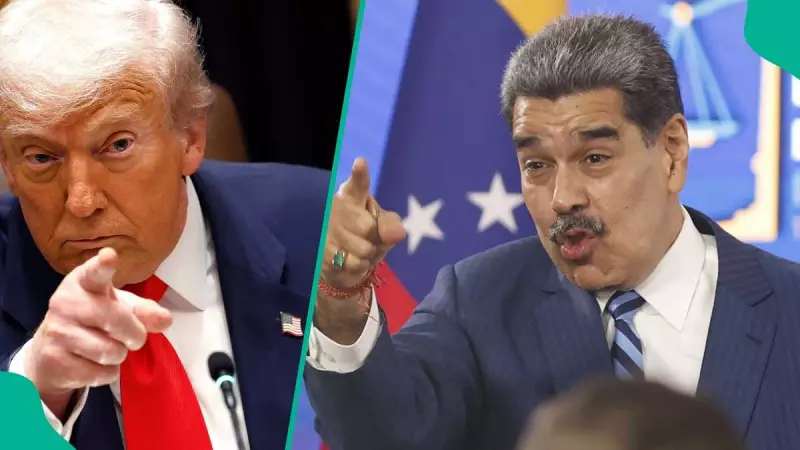
In a dramatic escalation of tensions, the United States has formally announced criminal charges against Venezuelan President Nicolás Maduro and First Lady Cilia Flores. This development comes directly after President Donald Trump claimed that US forces captured the couple during a large-scale military operation in the sovereign nation of Venezuela.
Formal Indictment and Charges Laid
US Attorney General Pamela Bondi confirmed the historic move on January 3, 2026. She stated that Maduro and Flores were indicted in the Southern District of New York. The charges are severe and multifaceted, marking a significant moment in international law and geopolitics.
The specific charges against the Venezuelan leader include:

- Conspiracy to import illicit drugs into the United States.
- Conspiracy to commit narco-terrorism.
- Conspiracy to possess machine guns and destructive devices.
- Actual possession of machine guns and destructive devices.
Bondi described the military mission that preceded the arrests as "incredible and highly successful" and extended her gratitude to the US armed forces. She left no doubt about the intended fate of the accused, asserting, "They will soon face the full wrath of American justice on American soil in American courts."
Mixed Public Reaction and Legal Precedent
The announcement has triggered a wave of reactions from American citizens and observers online, with many expressing skepticism and raising critical questions about the action's legality and consistency.
Social media user Natalie F Danelishen voiced a common concern, questioning priorities: "You guys seriously captured and arrested a president in another country before arresting anyone on the Epstein list."
Analyst Shen Shiwei challenged the legal basis, asking, "How could the U.S. legalise its 'military aggression' against another sovereign country... by labelling it as an 'operation'? When did the U.S. domestic law rise above other countries' domestic laws and international laws?"
Another commentator, identified as TM, highlighted the profound precedent being set: "If this proceeds in U.S. courts, it sets a huge precedent, prosecuting a sitting (or recently removed) head of state blurs the line between justice and geopolitics. The real test will be due process and evidence, not the headlines."
Further criticism pointed to perceived double standards. Amy Siskind recalled, "I’m old enough to remember that we just pardoned and released the former president of Honduras for far worse," a sentiment echoed by Sari Beth Rosenberg who questioned the difference between Maduro and the pardoned Honduran leader.
Background on Nicolás Maduro
The charges cap years of hostility between Washington and Caracas. Nicolás Maduro's rise to power is notable for its unconventional path. Before entering politics, he worked as a bus driver in Caracas and later became a trade union leader. His tenure as president has been marked by intense economic crisis and political confrontation with the United States, now culminating in an unprecedented military intervention and legal prosecution.
The world now watches to see how this bold application of US law on foreign soil will unfold, testing the boundaries of international justice and sovereign immunity.