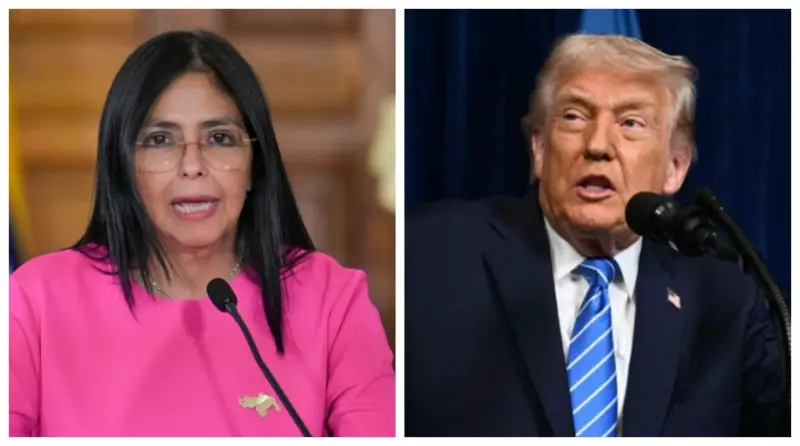
The United States government, under former President Donald Trump, has presented a strict list of four key conditions that Venezuela must fulfil before it can restart its crucial oil production. This development follows the capture of Venezuela's former leader, Nicolás Maduro, by US forces.
Core Demands from Washington
According to senior White House officials, the demands were communicated to Venezuela's interim president, Delcy Rodríguez, during talks led by US Secretary of State, Marco Rubio. The central requirements are clear and far-reaching.
Venezuela must completely cut its political and economic ties with China, Iran, Russia, and Cuba. Furthermore, the country is required to agree to partner exclusively with the United States on all future oil production and sales.

Officials stated that Rodríguez was explicitly asked to give priority to the Trump administration and American oil companies in any future oil sales agreements. The White House, however, has publicly described these reported demands as "alleged," declining to either confirm or deny them.
Immediate Deal and Long-Term Pressure
This move comes alongside an immediate agreement for Venezuela's interim government to sell tens of millions of barrels of already extracted oil to the United States. Secretary Rubio clarified that the proceeds from these sales would be managed by the US government. He promised the funds would be distributed to benefit the Venezuelan people directly, aiming to avoid corruption or support for remnants of the former Maduro regime.
US officials believe that without relying on oil revenue, Venezuela's economy can only survive for a few more weeks. To increase pressure, a significant US military presence has been positioned off Venezuela's coast, a tactic described by senior officials as leaving the interim government in Caracas with little choice but to comply.
A Three-Phase Plan and Broader Conditions
The administration has crafted a three-phase roadmap for Venezuela, encompassing stabilization, recovery, and transition. Beyond the oil and foreign policy demands, US lawmakers were informed that Venezuela must also commit to holding free and fair elections, release all political prisoners, and dismantle drug gangs operating within its borders.
However, Rubio indicated to lawmakers that the most urgent priorities remain expelling foreign adversaries, securing cooperation on oil, and improving counter-narcotics collaboration. Privately, Trump has expressed a desire to remove the influence of Iran, Russia, and China from the Western Hemisphere, with pressuring Venezuela seen as a critical first step.
If the Rodríguez government cooperates, the Trump administration has suggested it may consider reviewing the heavy sanctions currently imposed on Venezuela. The immediate US focus is preventing Venezuelan oil from reaching adversaries, even as longer-term plans to rebuild the country's energy infrastructure are developed.
In a related move, Trump is expected to meet with executives from major US oil companies like Chevron, Exxon Mobil, and ConocoPhillips at the White House. This follows his statement that Venezuela's interim government will hand over between 30 and 50 million barrels of sanctioned oil to be sold at market price under US control.