US Navy Intercepts and Seizes Iranian-Flagged Cargo Ship in Gulf of Oman
In a significant escalation of regional tensions, the United States Navy has intercepted and seized an Iranian-flagged cargo vessel, the Touska, in the Gulf of Oman. The action was confirmed by former US President Donald Trump in a statement posted on Truth Social, detailing the military operation that unfolded in the strategic waterway.
Details of the Naval Interception
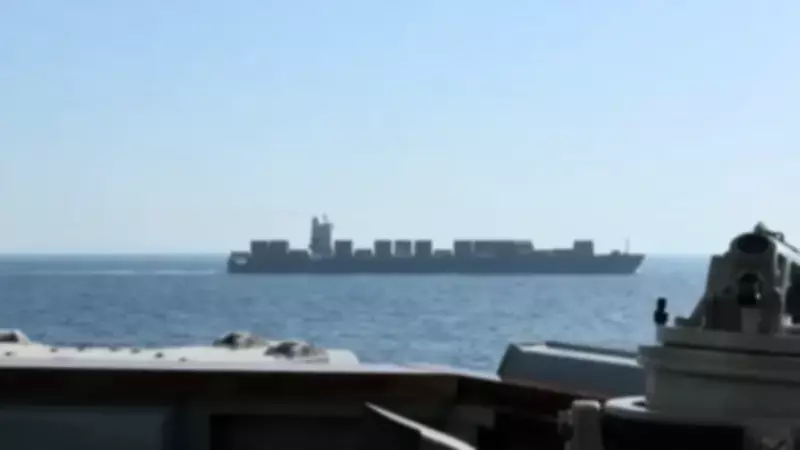
According to Trump, the Touska was intercepted after it allegedly attempted to breach a US naval blockade. The vessel reportedly failed to respond to multiple warnings to stop, prompting the US Navy to disable it by firing on its engine room. Following this, US Marines boarded the nearly 900-foot ship and took full custody of it.
The President noted that the Touska was already under US Treasury sanctions due to a history of illegal activities, adding a layer of justification for the seizure. This move has immediately threatened a fragile, Pakistan-mediated ceasefire that had been in place for two weeks, following five weeks of intense conflict involving the US, Israel, and Iran.

Iran's Response and Ceasefire Implications
Tehran has strongly condemned the incident, labeling it an "act of armed piracy" and a direct violation of the ceasefire terms. A spokesperson for Iran's military headquarters warned that the Armed Forces of the Islamic Republic would soon retaliate for the boarding and disabling of their commercial vessel.
The ceasefire, scheduled to expire this Wednesday, is now under immediate threat as diplomatic efforts face new challenges. Iranian officials have indicated they will not participate in negotiations as long as the US naval blockade remains in place, complicating efforts to prevent a return to full-scale hostilities.
Impact on Peace Negotiations and Regional Stability
The escalation comes at a critical time, just as a US delegation led by Vice-President JD Vance and including advisers Jared Kushner and Steve Witkoff was set to arrive in Islamabad for a second round of peace negotiations. However, Iranian state media has since denied that a second round of talks is currently planned, casting doubt on the future of diplomatic initiatives.
Pakistan has been actively coordinating between the two nations, but the seizure has strained these efforts. Global energy prices have already seen a sharp increase as the Strait of Hormuz remains closed and tensions in the region intensify, highlighting the broader economic and security implications of this incident.
As the situation develops, the international community watches closely, with concerns mounting over the potential for further military confrontations and the stability of one of the world's most vital maritime corridors.