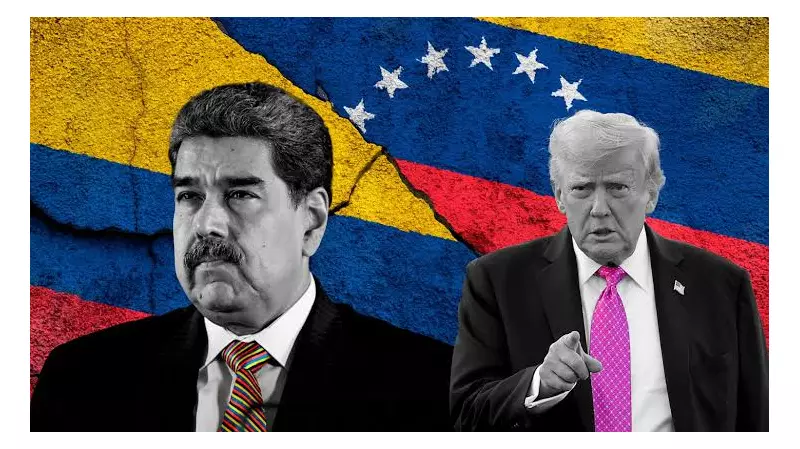
In a stunning development that has sent shockwaves across the globe, former US President Donald Trump has declared that American forces have captured Venezuelan President Nicolás Maduro following a series of air strikes on the South American nation's capital and other key locations.
Dawn Raids and Dramatic Claims
The Venezuelan capital, Caracas, was rocked by explosions and the sound of attack helicopters around 2:00 am local time (0600 GMT) on Saturday. According to reports from AFP journalists on the ground, the military action, which targeted major sites including the Fort Tiuna military complex and the Carlota airbase, lasted for nearly an hour.
Approximately two hours after the assault began, Trump took to his Truth Social platform to make a bold announcement. He stated that the United States had successfully executed a large-scale strike and that Maduro, along with his wife Cilia Flores, had been apprehended and flown out of Venezuela.

International Condemnation and Demand for Proof
The Venezuelan government was swift to label the event an "extremely serious military aggression" and called for an emergency United Nations Security Council meeting. Vice President Delcy Rodríguez, speaking via telephone to state television, revealed she did not know the location of Maduro and demanded Washington provide "proof of life" for the leader.
Reactions from international allies were immediate. Russia, a key supporter of the Caracas government, condemned the "armed aggression" and requested urgent clarification on Maduro's status. Iran and Cuba also denounced the attacks. Meanwhile, US officials framed the operation as a victory for justice. Attorney General Pamela Bondi declared Maduro and his wife would face American courts on drug trafficking and terrorism charges.
Regional Fallout and Civilian Fear
The strikes have triggered alarm across the region. Colombian President Gustavo Petro criticised the action and announced he was deploying troops to his country's border with Venezuela. Within Venezuela, the defence ministry accused the US of hitting residential areas and promised a "massive deployment" of its own military resources.
For ordinary citizens, the morning brought terror and confusion. Maria Eugenia Escobar, a 58-year-old resident of the struck city of La Guaira, described being lifted from her bed by the force of the blasts. In eastern Caracas, communications professional Francis Peña recounted being woken by his girlfriend's panicked words: "They're bombing." Many residents began hastily gathering essential documents and supplies.
A Long-Simmering Confrontation Escalates
This dramatic escalation follows months of heightened tension. Trump had repeatedly threatened to increase pressure on Maduro's administration, which the US accuses of leading a drug cartel—a claim Caracas rejects as a pretext to seize Venezuela's vast oil reserves. In recent months, the US had moved an aircraft carrier to the Caribbean, imposed new sanctions, and seized tankers carrying Venezuelan oil.
Trump described the operation to The New York Times as "brilliant," crediting extensive planning and US troops. He is scheduled to hold a news conference from his Mar-a-Lago residence in Florida. As the world awaits further details, the fate of Nicolás Maduro and the political future of Venezuela hang in the balance, marking a precarious new chapter in US-Venezuela relations.