US Government Announces Visa Restrictions Targeting Supporters of Adversaries
The United States government has unveiled a significant new visa restriction policy aimed at individuals accused of supporting countries or entities deemed hostile to American interests across the Western Hemisphere. In a statement released on Thursday, April 16, the US State Department confirmed that it is restricting visas for individuals from countries in the hemisphere who support adversaries in undermining America's regional interests.
Expanded Policy Targets Adversarial Activities
According to the State Department, the expanded restrictions will apply to persons who knowingly direct, authorise, fund, or provide significant support to actors considered adversarial to the United States within the region. The department disclosed that at least 26 individuals have already had their visas revoked under these new measures.
Activities targeted include:

- Enabling adversarial powers to acquire or control key assets and strategic resources in the Western Hemisphere
- Destabilising regional security efforts
- Undermining American economic interests
- Conducting influence operations designed to undermine the sovereignty and stability of nations in the region
Trump's Hemispheric Strategy Implementation
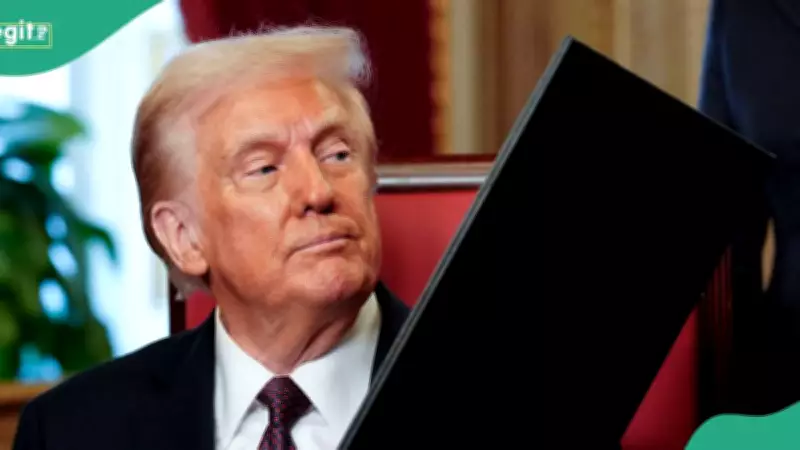
The announcement aligns with President Donald Trump's broader foreign policy agenda aimed at strengthening US dominance in the region, which he has described as the "Donroe Doctrine"—a modern adaptation of the historic Monroe Doctrine. Since returning to office, Trump has adopted a hardline approach to issues such as drug trafficking and foreign influence, warning of economic sanctions and possible military consequences for countries that fail to comply with US expectations.
The administration has also moved to counter the expanding influence of China in Latin America, as several countries deepen economic and political ties with Beijing. While the statement did not name specific countries, it comes amid growing concern in Washington over foreign influence and security threats in Latin America.
Legal Authority and Implementation
The State Department said the policy is backed by provisions of the Immigration and Nationality Act, which allows the secretary of state to deny entry to foreign nationals deemed capable of causing potentially serious adverse foreign policy consequences for the United States. The same legal authority has previously been used in attempts to revoke visas linked to political activism, including pro-Palestinian student protests.
More recently, visas have also been cancelled for at least seven individuals connected to the Iranian government or the 1979 Iranian revolution. Although some deportation efforts were later dropped, individuals such as Mahmoud Khalil and Badar Khan Suri are still facing possible removal from the US.
Latin American Political Tensions Drive Visa Actions
Several high-profile figures in Latin America have been affected by visa restrictions amid diplomatic disagreements with Washington. In July, Brazilian officials involved in legal proceedings against former President Jair Bolsonaro, including Supreme Court Justice Alexandre de Moraes, had their visas withdrawn.
Similarly, Colombian President Gustavo Petro saw his visa revoked in September following remarks at the United Nations General Assembly that were critical of US policy. The State Department at the time described his actions as reckless and incendiary, although relations later improved, leading to a White House invitation in February.
Broader Immigration and Security Strategy
Visa restrictions have formed part of a wider strategy by the Trump administration to exert pressure on foreign actors while tightening immigration controls. Earlier this year, the US imposed visa bans on multiple countries, citing national security concerns and pressure on public services.
The administration has also taken an increasingly forceful stance in the region, referring to the Western Hemisphere as America's neighbourhood and stepping up operations against drug trafficking networks. US authorities have designated several drug cartels as foreign terrorist organisations, arguing that their activities pose a direct threat to national stability.

However, rights groups have raised concerns over the human cost of recent enforcement actions, particularly a series of lethal strikes targeting suspected drug-smuggling operations in the eastern Pacific Ocean and Caribbean Sea. Despite criticism, the Trump administration maintains that its measures are necessary to safeguard US interests and regional stability.
The United States Mission in Nigeria has previously given updates on visa rules, stating that restrictions are not permanent and that travel policies are subject to periodic review based on evolving global conditions and security needs.