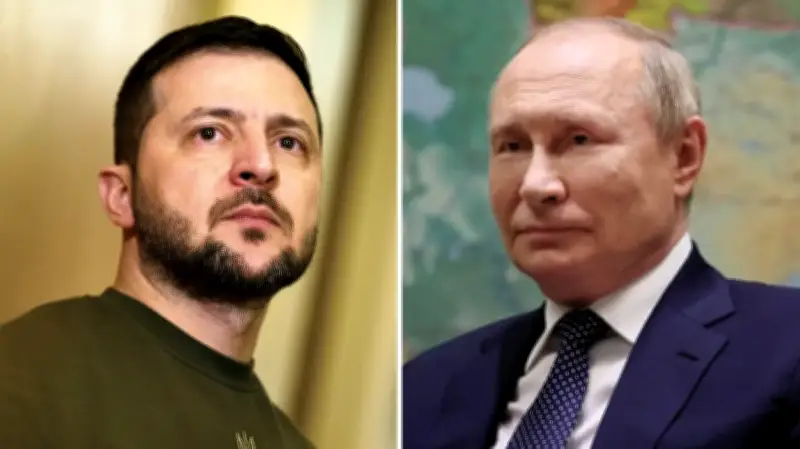
Ukrainian President Volodymyr Zelensky has issued a direct challenge to Russian President Vladimir Putin, calling for face-to-face peace negotiations in an open letter released during the St. Petersburg International Economic Forum. The letter intensifies pressure on Moscow, highlighting growing economic struggles and war fatigue within Russia.
Zelensky Highlights Russian Discontent
In the letter, Zelensky argued that economic difficulties and war fatigue in Russia are becoming increasingly visible, suggesting that public dissatisfaction is mounting as the conflict drags on. “We can all see that Russians are finally becoming less comfortable with this reality — with the fact that the war is bringing more and more negative consequences to Russia,” he wrote.
He also accused Putin of repeatedly failing to achieve military objectives, particularly regarding the full capture of the Donetsk region. “And you will not capture it this year either,” Zelensky stated bluntly.

Warning to Putin
Zelensky addressed Putin directly, warning that continued conflict could threaten the Russian leader’s own political future. “You will have to fight much harder for your own existence, not Russia’s, but your own,” he wrote. He added that change often comes when Russian society grows tired of prolonged hardship.
The Ukrainian leader renewed calls for direct engagement between both sides, proposing a meeting in a neutral third country with a clearly defined date and a full ceasefire in place before discussions begin. “An attempt to establish real silence is the best way to begin talking to one another,” he said.
Kremlin Responds
The Kremlin confirmed it had received the message, with spokesperson Dmitry Peskov saying Putin had been briefed. Peskov added that if Zelensky wants talks, “he can come to Moscow.” Zelensky rejected that option, maintaining that negotiations should occur in a neutral location.
Meanwhile, Putin said proposals previously suggested by US President Donald Trump could serve as a basis for future peace agreements if both sides are willing to compromise. Despite repeated promises to end the conflict quickly, diplomatic efforts have yet to produce a breakthrough, while political debates in Washington continue over future military aid and sanctions related to the war.
The conflict, now in its fourth year, continues alongside increasing pressure on both economies, growing battlefield challenges, and ongoing international efforts to secure a lasting peace agreement.