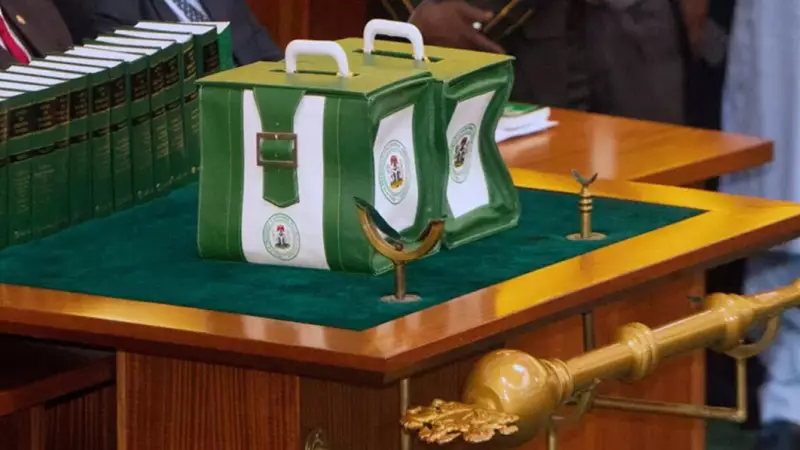
The Budget Office of the Federation's recent attempt to clarify the legal basis for the repeal and re-enactment of the 2024 and 2025 Appropriation Acts has drawn critical analysis from policy experts. While the office's effort to address public concerns is noted, the explanation has sparked significant questions regarding constitutional adherence, fiscal discipline, and transparency.
Constitutional Silence vs. Purpose in Budgeting
In a statement dated 12 January 2026, the Budget Office sought to defend the extraordinary fiscal action. However, economist and policy analyst Prof. Chiwuike Uba argues that the office's reliance on the Constitution not expressly prohibiting such a move is problematic. He contends that Nigeria's Constitution embeds the principle of annual budgeting as a fundamental tool for legislative oversight of public finances.
"Appropriation is not just any law; it is a time-bound authorization meant to enforce discipline, predictability, and accountability in public spending," Uba notes. The repeal and re-enactment of two consecutive budgets is an exceptional measure that, according to him, requires a clear demonstration of absolute necessity—a justification he finds missing from the official explanation.

Legal Distinctions and Transparency Gaps
A key point of contention is the conflation of legislative extension with repeal and re-enactment. Uba clarifies that an extension preserves an existing mandate for limited purposes, like completing ongoing projects. In stark contrast, a repeal completely extinguishes the previous legal authority and replaces it with a new one. Treating these distinct actions as equivalent risks undermining the doctrine of annuality and could blur the lines for retroactive fiscal regularization.
Furthermore, the response to allegations of expenditure without proper appropriation fails the core constitutional test. The critical issue, anchored in Section 80 of the Constitution, is whether valid legislative authority existed at the exact time financial commitments were made and payments were processed. Uba warns that post hoc legislative action, even if procedurally sound, cannot replace the requirement for prior authorization without eroding legislative control over public funds.
Public Access to Documents Remains an Issue
The justification for delayed public access to the authenticated budget documents has also been labeled unconvincing. Transparency obligations under the Fiscal Responsibility Act are not conditional on administrative convenience or internal harmonization processes. Once an Appropriation Act receives presidential assent, it becomes law and should be immediately accessible to citizens. Withholding these documents weakens public oversight, damages trust, and contradicts the spirit of fiscal transparency.
Uba also challenges the notion that Nigeria's representative democracy negates the need for openness in fiscal governance. Modern public finance management emphasizes that timely disclosure, clarity, and citizen access to budget information are essential complements to legislative representation. Invoking representative democracy alone, he argues, is insufficient to justify opacity in matters of public expenditure.
Conclusion: Legality vs. Accountability
The central debate is not about the legislative competence of the National Assembly and the Executive but how that power is exercised. Procedural legality, while important, is not a substitute for transparency, proper justification, and respect for the foundational principles of public finance. The Nigerian public deserves more than an assurance that these actions were "not prohibited." They are entitled to a clear explanation of the necessity for such extraordinary measures, how they align with constitutional norms, and what safeguards will prevent a recurrence.
Prof. Uba concludes that failing to provide these answers risks normalizing exceptional fiscal practices and further weakening confidence in Nigeria's public finance system.