President Bola Tinubu has declared a decisive end to the recurring cycle of budget rollovers and underperformance with his 2026 spending plan. The move comes as a direct response to the acknowledged gaps in implementing the 2024 and 2025 national budgets, a challenge top government officials have openly admitted.
Addressing the Legacy of Underperformance
The struggles with the 2024 and 2025 budgets are now a matter of public record. Senior government figures responsible for budgetary matters have been transparent about the fact that these budgets were not fully funded. Dr. Tanimu Yakubu, the Director-General of the Budget Office of the Federation, highlighted a key issue at a stakeholders' meeting in August 2025. He revealed that the Federal Government was funding the 2024 capital budget using revenue from the 2025 fiscal year.
This situation was compounded by underperforming revenue projections, particularly from the oil sector, which failed to meet its production quota. Consequently, the National Assembly approved the rollover of the 2024 budget into 2025 and later sanctioned the rollover of 70% of the 2025 capital projects into 2026. This pattern prompted calls from economic experts, including Dr. Muda Yusuf of the Centre for the Promotion of Private Enterprises, for a holistic review of the budgeting process to break this inefficient cycle.

The 2026 Blueprint: A "Budget of Consolidation"
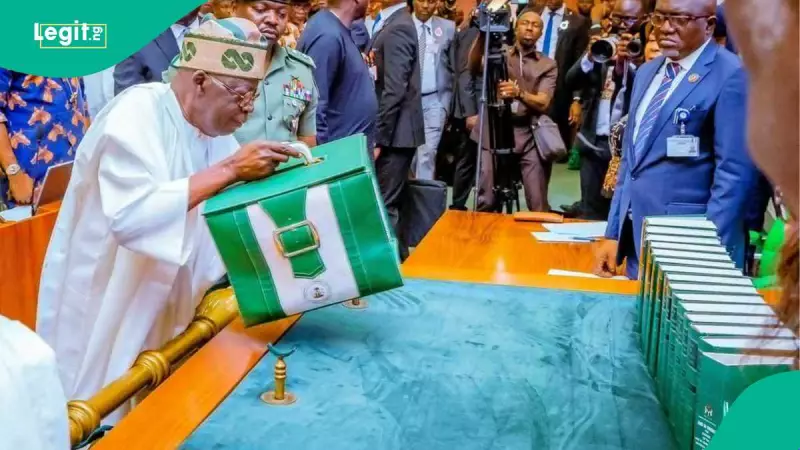
On Thursday, December 18, 2025, President Tinubu presented a new framework to the National Assembly designed to correct these anomalies. The N58.18 trillion 2026 budget proposal, titled "Budget of Consolidation, Renewed Resilience and Shared Prosperity," is anchored on fiscal discipline and sustainable development.
In his presentation, the President issued a clear directive: "2026 will be a year of stronger discipline in budget execution." He has mandated key officials, including the Minister of Finance and the Director-General of the Budget Office, to ensure strict adherence to appropriated details and timelines. The plan is to leverage new legislation like the National Tax Acts and ongoing oil and gas sector reforms to boost revenue performance.
A Digital Push for Accountability
A cornerstone of the new strategy is a comprehensive digital overhaul of revenue collection. The government plans to deploy:
- Standardised e-collection systems.
- Interoperable payment rails.
- Automated reconciliation processes.
- Data-driven risk profiling.
- Real-time performance dashboards.
This end-to-end digitisation aims to seal financial leakages, verify compliance, and ensure prompt remittances. President Tinubu emphasized that revenue targets will become a core part of performance evaluations for government agencies, stating, "Nigeria can no longer afford leakages, inefficiencies, or underperformance."
Sectoral Priorities and Political Reactions
The 2026 budget prioritises five critical sectors with significant allocations:
- Defence and Security: N5.41 trillion
- Infrastructure: N3.56 trillion
- Education: N3.52 trillion
- Health: N2.48 trillion
The President linked these priorities, arguing that security enables investment, while educated and healthy citizens drive productivity. However, the proposal has faced criticism from the opposition. The African Democratic Congress (ADC) dismissed it as "a copy and paste" of previous plans, with its spokesman Bolaji Abdullahi alleging it reflects "fiscal recklessness and unrealistic projections."
Despite this, the administration remains optimistic. The budget is guided by three core principles: better revenue mobilisation, prioritised spending, and enhanced accountability through stronger procurement discipline. The government asserts that lessons have been learned from past drawbacks, and the 2026 budget represents a defining moment for locking in macroeconomic stability and ensuring growth benefits every Nigerian.