Despite increasing budgetary allocations to education in oil-rich Delta State, many public schools remain in a state of disrepair, forcing pupils to learn in dilapidated classrooms and sit on bare floors. This persistent neglect raises serious concerns about the management of education funds and government oversight.
Rising Budgets, Falling Standards
Delta State's education budget has more than doubled from N46.55 billion in 2024 to N105.086 billion in 2026, signaling a commitment to building an inclusive, technology-driven education system. However, visible signs of decay and lack of care indicate that funding has not translated into meaningful improvements in classrooms.
In 2024, the state allocated N46.55 billion to education out of a total budget of N725 billion. In 2025, the allocation rose to N67.42 billion within a N979 billion budget. The 2026 budget, under the "Budget of Accelerating the MORE Agenda," allocates N105.086 billion for constructing new schools, upgrading facilities, and advancing technology-based learning.

Reality on the Ground
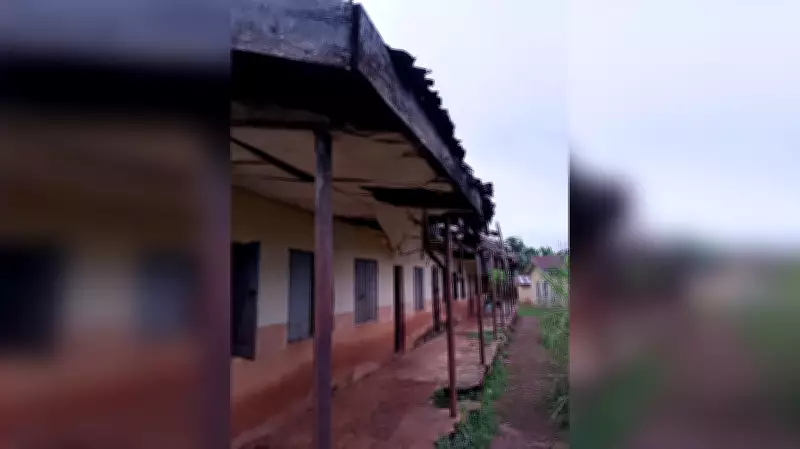
Across Delta communities, public schools suffer from teacher shortages, insufficient desks, substandard classrooms, and dilapidated buildings. At Ejedinka Primary School in Aniagbala, Ubulu-Uku, Aniocha North Local Council, classrooms are roofless, walls are shattered, and there is virtually no furniture. A single teacher often handles two classes simultaneously due to a shortage of teaching staff.
Community member Dr. Jude Iyitor lamented the deterioration: "In our days, the school used to be an attractive environment. But today, the condition scares people away. There are no seats, not enough teachers, no proper road." Another resident, speaking anonymously, described the situation as heartbreaking: "The pupils are all sitting on the floor. How can they learn properly?"
Similar conditions prevail at Obi Ezeamaka Primary School in Nsukka, Aniocha South Local Council, and Isioma Onyeobi College in Asaba. Parents say these schools reflect a broader crisis in Delta's public education system.
Oil Wealth, Poor Schools
Mr. Ebruke Esike, Executive Director of Global Peace Development (GPD) Nigeria, highlighted challenges in five rural communities in Isoko North and South Local Councils. At Ukpude Primary School, only a headmistress, one teacher, and a non-academic staff member serve the school, with only four desks for pupils. Aka Primary School in Ukpude Community, an oil-producing area, has classrooms without doors, windows, desks, or chairs. Pupils sit on the floor with exercise books on their laps.
Former Financial Secretary of Ukpude Community, Samuelson Atamu, said: "Our children are learning under conditions that make education almost impossible. We are not asking for too much; just give our children a school they can be proud of."
Allegations of Corruption and Mismanagement
An educationist who spoke on condition of anonymity blamed the crisis on alleged corruption: "Politicians squander money with reckless abandon. Huge funds are budgeted for education every year, but the money often ends up in private pockets."
Government insiders revealed that Governor Sheriff Oborevwori has expressed frustration over the deteriorating condition of public schools despite investments. This led to a reshuffle in the education ministries: Mrs. Rose Ezewu was redeployed from Secondary Education to Primary Education, while Kingsley Ashibuogwu moved from Primary to Secondary Education. The reshuffle aims to strengthen oversight and address inefficiency or financial mismanagement.
Commissioner Ezewu did not respond to requests for comment.
Call for Urgent Action
Education stakeholders warn that without urgent intervention, the decay of public schools will worsen the learning crisis. For parents and pupils in affected communities, the issue is about the future of their children. Until decisive action is taken, many in Delta State will continue to learn in classrooms without roofs, desks, or basic safety.