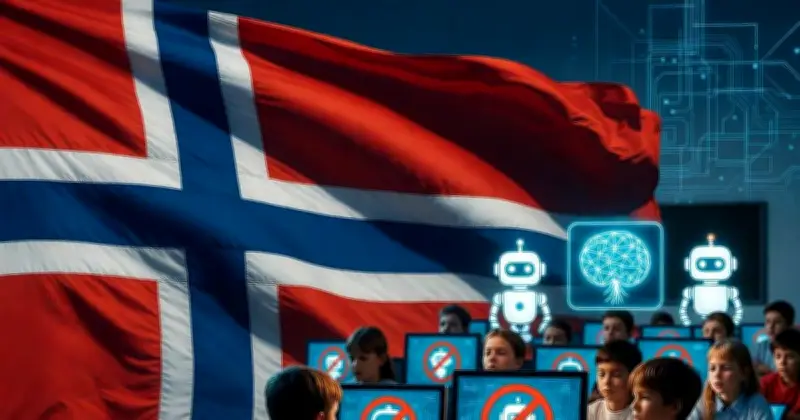
Norway has announced a ban on the use of generative artificial intelligence (AI) tools by elementary school pupils, becoming one of the latest countries to tighten restrictions on technology use among children. The new rule, which takes effect when the school year begins in late August, will prevent students in grades one through seven, roughly ages six to 13, from using AI tools such as ChatGPT and similar platforms in school.
Prime Minister Støre emphasizes foundational skills
Speaking at a press conference on Friday, Prime Minister Jonas Gahr Støre said the decision was aimed at protecting foundational learning skills. “The most important thing in school is that our children learn to read, write and do mathematics,” Støre said. According to the Norwegian government, unrestricted access to generative AI could encourage students to bypass critical parts of the learning process, potentially affecting their academic development.
Age-based restrictions
The restrictions will also apply to older students, although in a less stringent form. Children between the ages of 14 and 16 will only be allowed to use generative AI under the direct supervision of a teacher, while students aged 17 and above will be encouraged to use the technology responsibly on their own.

Following successful smartphone ban
The move follows Norway's earlier decision to ban smartphones in schools in 2024. That policy has since been linked to positive outcomes across the country's education system. Research conducted by Sara Abrahamsson, which examined more than 400 Norwegian middle schools, found that the smartphone ban helped reduce bullying, improve academic performance and significantly lower the number of students seeking psychological support. The study reported that visits to psychology specialists dropped by around 60%, with girls experiencing the most notable benefits.
Expected benefits of AI ban
Norwegian authorities believe the AI restrictions could produce similar results by reducing distractions and ensuring younger students develop essential skills before relying on advanced technology. The country is also moving to limit children's access to social media. In April, the government announced plans to introduce legislation that would prohibit children under 16 from using social media platforms. The proposal is expected to be presented to parliament before the end of 2026.
Global context and challenges
If approved, the measure would mirror Australia's social media ban for under-16s, which came into force in December 2025. Similar discussions are also taking place in the United Kingdom and several European Union countries as governments grapple with growing concerns over the impact of digital technologies on young people. Norway's latest AI policy comes amid increasing global debate about how children should interact with emerging technologies. While some countries are exploring regulations aimed at AI companies, Norway has opted for a more direct approach by setting clear age-based restrictions within schools.
Support and enforcement concerns
Supporters argue the policy gives children more time to develop critical thinking, literacy and problem-solving skills without depending heavily on AI-generated content. However, questions remain about how effective such restrictions will be outside the classroom. Generative AI tools remain widely accessible through smartphones, tablets and computers at home, making enforcement beyond school grounds a challenge. For now, Norway is betting that schools are the best place to start as governments worldwide continue searching for ways to balance technological innovation with child safety and education.