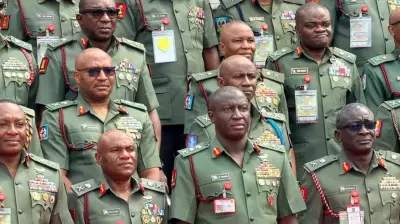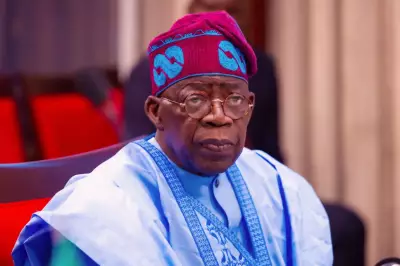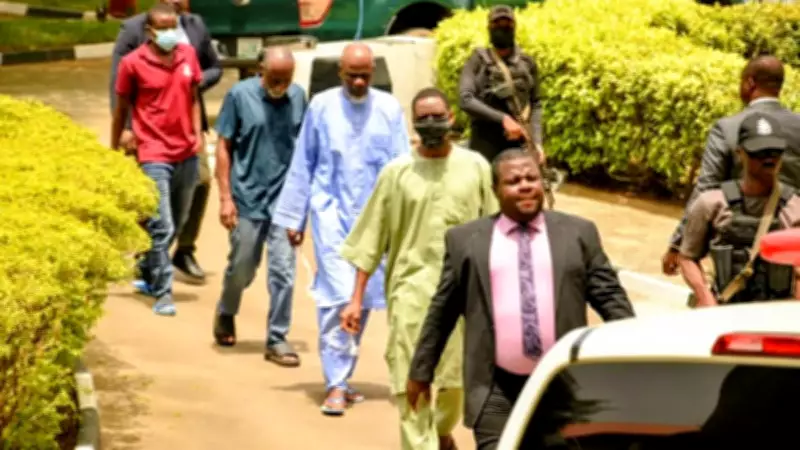
A Federal High Court in Abuja has commenced a trial-within-trial in the ongoing prosecution of six individuals accused of plotting to overthrow the government of President Bola Tinubu. The special proceeding aims to determine whether extra-judicial statements allegedly obtained from the defendants by military investigators were made voluntarily or extracted through coercion, torture, or inducement, as alleged by the defense.
Judge's Directive and Prosecution's Case
At the outset of the proceedings, the trial judge cautioned both parties to confine arguments strictly to the issue of voluntariness and avoid delving into substantive matters already pending before the court in the main trial. The prosecution, led by Director of Public Prosecution Rotimi Oyedepo, informed the court that three witnesses had been lined up for the trial-within-trial and subsequently called its first witness, an officer of the Nigerian Army Corps of Military Police, who also serves as the fourth prosecution witness in the substantive case.
Witness Testimony
While being led in evidence, the witness told the court that the defendants were calm, composed, and fully aware of their constitutional rights before making their statements. He maintained that the investigation complied with standard operating procedures and the provisions of the Administration of Criminal Justice Act (ACJA). The prosecution thereafter tendered statements allegedly obtained from the six defendants by the Special Investigative Panel (SIP) and the Military Police. Statements linked to the first to fifth defendants were admitted as Exhibits A to E, while that of the sixth defendant was admitted as Exhibit F.

Admission of Exhibits
The court also admitted a black external hard drive and a flash drive said to contain video recordings of the defendants’ statements, alongside certificates of identification, as Exhibits G, G1, H and H1, after defense counsel did not object to their admissibility during the proceeding. The witness repeatedly insisted that none of the defendants was denied access to legal representation and that all suspects were informed of their constitutional rights, including the right to remain silent and the right to engage counsel of their choice.
Details on First Defendant
Speaking of the first defendant, a retired senior military officer, the witness described him as calm and cooperative throughout the interrogation process. According to him, the defendant was kept in a properly ventilated room, cautioned about his rights, and informed that whatever statement he made could later be tendered in court. The witness further told the court that the video recordings showed no evidence of intimidation, coercion, or inducement, adding that the consistency between the oral interviews and written statements reinforced the claim that the statements were voluntarily made.
Defense Cross-Examination
Responding to allegations that the written statements did not exactly correspond with the recorded interviews, the witness explained that written accounts could not be expected to reproduce oral interviews word-for-word because “human beings are not computers.” Defense counsel confronted the witness with alleged discrepancies relating to dates of recordings, absence of lawyers during interrogations, lack of footage showing actual writing of statements, and the omission of cautionary words in some exhibits. The witness, however, insisted that the investigation process was transparent and conducted in line with military procedures and constitutional safeguards.
Adjournment
Following the proceedings, the court adjourned the matter till May 13, 2026, for continuation of the trial-within-trial.