Aloy Ejimakor Declares All Eastern Region Natives as IPOB Members
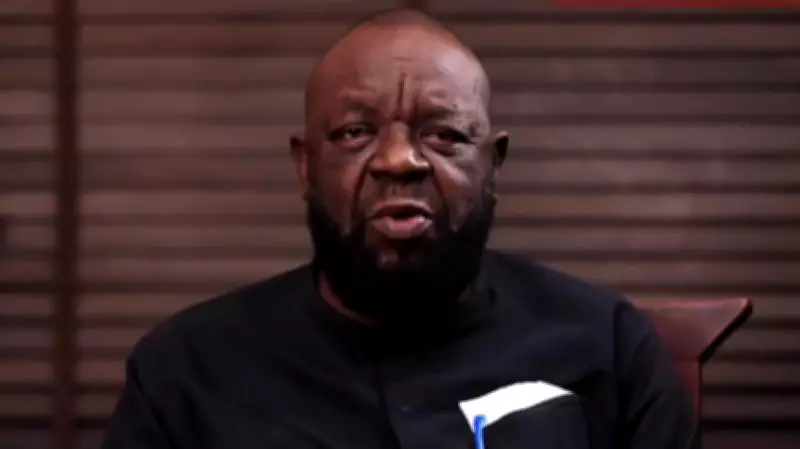
Aloy Ejimakor, the legal counsel to the imprisoned leader of the Indigenous People of Biafra (IPOB), Nnamdi Kanu, has made a bold statement asserting that every native of the defunct Eastern region of Nigeria is a bona fide member of IPOB. In a recent post on the social media platform X, Ejimakor argued that labeling IPOB as a terrorist sponsor is equivalent to naming Arewa of the North and Oduduwa of the Southwest as terror sponsors, calling it a misnomer that cannot stand.
Ejimakor's Statement on Ethnic Membership
According to Ejimakor, this truth is self-evident: every individual from the former Eastern Nigeria, also referred to as Biafra or NDIGBO, is ethnically a legitimate member of IPOB. He emphasized that the categorization of IPOB alongside terrorist groups is fundamentally flawed and unjust. This declaration comes in response to the Federal Government's recent actions, which have sparked controversy and legal challenges.
Federal Government's Terrorism Sponsor List
The Nigeria Sanctions Committee (NSC) issued a list on its website that includes IPOB among entities designated as sponsors of terrorism in Nigeria. This list features prominent names such as Finland-based factional leader of IPOB, Simon Ekpa, and the publisher of Desert Herald, Tukur Mamu. Additionally, it names numerous individuals including Abdulsamat Ohida, Mohammed Sani, and others, along with entities like G.Side General Enterprises and Desert Exchange Ventures Limited.

The government's list places IPOB in the same category as notorious terror groups like Boko Haram and the Islamic State West Africa Province (ISWAP), a move that has drawn sharp criticism from various quarters.
Ejimakor's Legal Critique and Contempt of Court Claim
In his reaction, Ejimakor strongly condemned the Federal Government's publication, describing it as contempt of court. He pointed out that there is a pending case before the Supreme Court regarding IPOB's status, making the matter subjudice. Ejimakor revealed that he personally signed and filed the appeal, underscoring his direct involvement in the legal proceedings.
He argued that by listing IPOB as a terrorist sponsor while the case is still under judicial review, the government is disregarding legal protocols and potentially influencing the court's decision. This, according to Ejimakor, undermines the integrity of the judicial process and sets a dangerous precedent.
Broader Implications and Reactions
Ejimakor's statements highlight ongoing tensions in Nigeria's political and security landscape, particularly concerning the treatment of secessionist groups and ethnic affiliations. His comparison of IPOB to Arewa and Oduduwa suggests a call for consistency in how the government addresses regional and ethnic movements across the country.
The inclusion of IPOB on the terrorism sponsor list has not only legal ramifications but also social and political consequences, potentially exacerbating divisions and fueling debates over national unity and security policies. As the Supreme Court case progresses, stakeholders are closely watching for developments that could reshape the narrative around IPOB and similar organizations.