Lawyer Aloy Ejimakor Urges Federal Government to De-proscribe IPOB
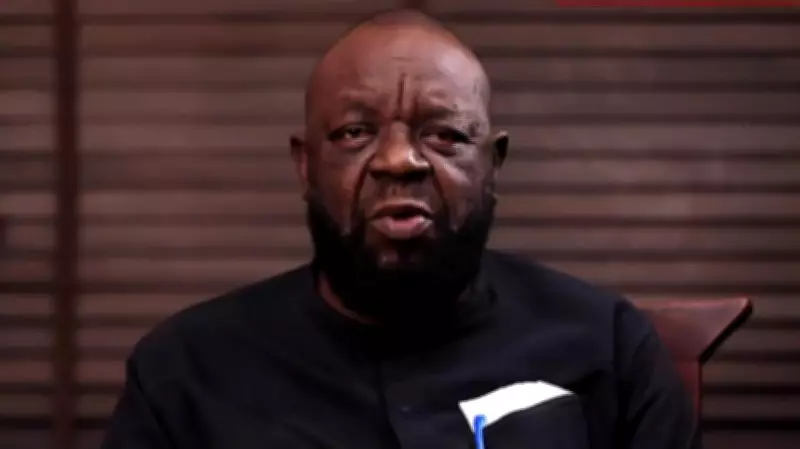
Prominent lawyer Aloy Ejimakor has called on the Federal Government to de-proscribe the Indigenous People of Biafra (IPOB) as a terrorist organization, asserting that the 2017 designation was never about genuine national security concerns. In a detailed opinion piece, Ejimakor contends that the proscription was instead a politically motivated tool designed to suppress legitimate political dissent by the Igbo people and criminalize an entire ethnic group's political expression.
International and Domestic Legal Challenges
Ejimakor reveals that international bodies, Nigerian courts, and even foreign governments like the United States and United Kingdom have repeatedly flagged the terror tag on IPOB as disproportionate, unlawful, and discriminatory. He highlights that on October 1, 2020, multiple UN Special Rapporteurs sent an official communication to the Nigerian government urging it to "reconsider the proscription of IPOB as a terrorist group." The rapporteurs explicitly warned that "proscription should not be used as a means to quell legitimate political opinion and expression, nor to prevent individuals from exercising their rights of peaceful assembly and of association."
Further concerns were raised by the rapporteurs, who stated: "We are concerned that these growing restrictions... may [reflect] a growing climate of intolerance towards the Igbo and Christian minorities..." Ejimakor notes that this criticism builds on earlier findings by former Special Rapporteur Agnes Callamard in her end-of-visit statement from September 2, 2019.

UN and African Commission Rulings
In Opinion No. 25/2022, published in July 2022, the UN Human Rights Council examined the case of IPOB leader Mazi Nnamdi Kanu. The council declared his detention arbitrary, citing his rendition as directly tied to his leadership of IPOB. It demanded his unconditional release and compensation, underscoring that criminalizing membership in IPOB violates international standards on freedom of association and expression.
Additionally, on March 18, 2018, the African Commission on Human and Peoples' Rights (ACHPR) issued provisional measures in Communication 680/17 (Nnamdi Kanu & IPOB v. Federal Republic of Nigeria). The commission explicitly called on Nigeria to "rescind its decision branding IPOB and its members as terrorists" and "not to take any further action so as to avoid irreparable damage to the Victim, IPOB and its members."
Nigerian Court Judgment
Ejimakor recalls that on October 26, 2023, in Suit No. E/20/2023 before Justice A.O. Onovo of the Enugu State High Court, the court declared the 2017 proscription of IPOB "illegal, unconstitutional, null and void." The court awarded N8 billion in damages to Mazi Nnamdi Kanu and ordered a public apology. Crucially, the court ruled that the proscription and its enforcement violate Section 42 of the 1999 Constitution, which prohibits discrimination on the basis of ethnicity. This judgment stands as binding authority, exposing the proscription's true intent as collective punishment of Igbos for seeking a referendum.
Foreign Government Stances
Ejimakor points out that neither the United States nor the United Kingdom has ever designated IPOB a terrorist organization. He states, "Nigeria lobbied both governments to do so internationally and both refused." The UK applies a "rigorous, evidence-based approach" and concluded that IPOB "does not meet the legal criteria to be banned under UK law." Similarly, the US has declined to designate IPOB, with the Council on Foreign Relations (CFR) warning in a February 10, 2022 analysis that such a designation would be a "mistake that risks causing a massive human rights crisis."

Call for Justice and Dialogue
Ejimakor argues that the evidence is irrefutable and compelling – the terror tag on IPOB is not a genuine security policy but a thinly-veiled ethnic discrimination aimed at Igbos. He asserts that it has enabled extrajudicial killings, mass arrests, and a climate of fear, while legitimate political agitation is crushed. "De-proscription is not clemency; it is justice. It restores constitutional equality, complies with binding international opinions, and ends the weaponization of anti-terror laws against one ethnic group," he said.
He concludes by urging Nigeria's government to act now to repeal the proscription, release those held solely for IPOB affiliation, and engage in genuine dialogue to address the underlying issues.