Kano Lawyers: Suit to Stop Garo's Deputy Governor Screening Premature and Invalid
Prominent legal practitioners in Kano State have issued a stern warning to proponents behind a purported lawsuit seeking to halt the legislative processes for the screening and confirmation of Murtala Sule Garo for the vacant seat of deputy governor. The senior lawyers have submitted that attempting to interject in the constitutional responsibility of an independent arm of government not only amounts to an exercise in futility but also represents a premature and invalid standard practice.
Legal Challenge Against Screening Process
The lawyers were reacting to a notice filed by Kuliyya Muhammad Salihu and two others before the Kano State House of Assembly, seeking to stop the screening of Murtala Sule Garo, a leading nominee for the position of Deputy Governor in Kano. The petitioners claimed to have filed a suit before a Kano High Court concerning Garo's nomination and urged the assembly to suspend any attempt to carry out legislative processes and procedures for confirming the former Commissioner for Local Government Affairs.
Senior Lawyers Question Procedural Foundation
In their separate submissions, however, Abdul Adamu Fagge, a Senior Advocate of Nigeria (SAN), and prominent human rights lawyer Abba Hikima insisted that those claiming to have filed a lawsuit against Garo are simply desperate to interfere with the selection process. Abdul Adamu Fagge, SAN questioned the procedural and factual foundation of the case being peddled by the petitioners, insisting that courts cannot act on uncertainty or assumptions.

He argued that it remains unclear whether any formal screening process has actually commenced, stressing that judicial intervention must be based on established facts rather than speculation. Fagge further maintained that court proceedings require properly verified processes and cannot be grounded in media reports or unconfirmed claims. The senior lawyer also warned against attempts to interfere with the constitutional functions of the legislature, emphasizing that each arm of government must be allowed to operate within its defined mandate without unnecessary interference.
Jurisdictional and Constitutional Concerns
In a separate but related perspective, Barrister Abba Hikima argued that the matter raises significant issues of jurisdiction and constitutional boundaries, noting that courts should exercise extreme caution when considering interference with legislative processes. He described the case as having clear political undertones, arguing that legal processes are sometimes strategically used to advance specific political interests rather than genuine legal concerns.
Hikima maintained that the State House of Assembly derives its powers directly from the Constitution and cannot be restrained by the court in the exercise of its legislative functions at this preliminary stage. He warned that allowing such intervention could potentially open the door to constant judicial interference in legislative activities, which might ultimately disrupt governance and undermine the separation of powers principle that forms the foundation of Nigeria's democratic system.
Converging Legal Perspectives
Although the two lawyers approached the matter from different legal angles—one focusing primarily on procedural validity and the other on jurisdictional limits—their views converge in a way that casts substantial doubt on the strength and legitimacy of the suit seeking to halt the screening process. Both legal experts emphasized the importance of allowing constitutional processes to proceed without premature judicial intervention, particularly when the facts of the case remain unverified and the legislative process has not formally commenced.
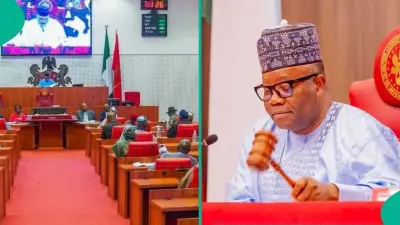
The legal community in Kano continues to monitor developments closely as the State House of Assembly prepares for potential screening proceedings, with many observers noting that this case highlights ongoing tensions between different branches of government and the delicate balance required in Nigeria's constitutional democracy.