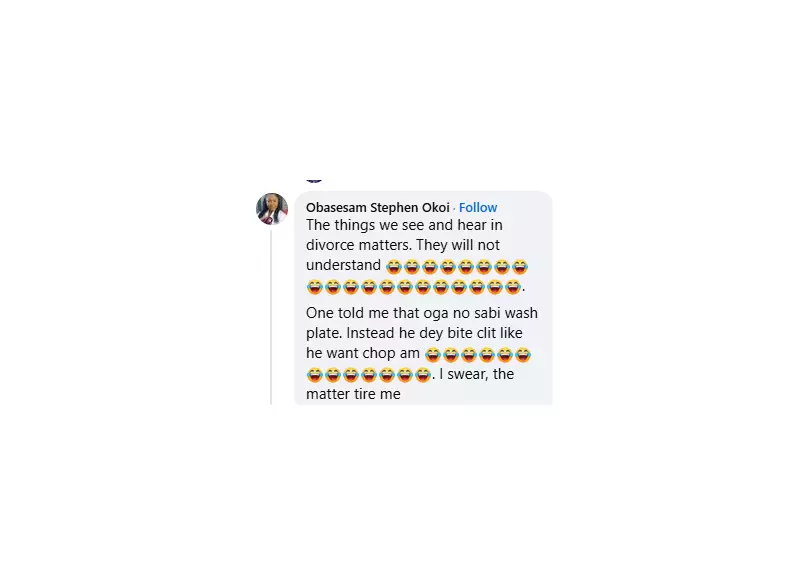
A Nigerian legal practitioner has pulled back the curtain on the deeply personal and often shocking revelations that surface during divorce proceedings, offering a rare glimpse into the private breakdown of marriages.
Viral Confession from the Courtroom
The incident came to light when lawyer Obasesam Stephen Okoi reacted to a story shared by her colleague, Firsts Baba Isa. Baba Isa had narrated an encounter where a man, during a divorce case, attempted to remove his clothes to show his penis after his wife allegedly compared it to a woman's little finger.
In her response, Okoi decided to share an equally startling account from her own professional experience. She revealed that a female client confided in her about a deeply intimate issue contributing to the marital discord.

The Client's Intimate Revelation
According to the lawyer, the client disclosed that her husband lacked proficiency in oral sex, using a vivid Nigerian Pidgin expression to describe the situation. "Oga no sabi wash plate. Instead he dey bite clit like he want chop am," Okoi quoted her client as saying. This translates to the husband not knowing how to perform the act correctly, instead biting her clitoris aggressively.
Okoi expressed the emotional toll such cases take on legal professionals, ending her post with, "I swear, the matter tire me," highlighting the exhaustion that comes from handling such sensitive and graphic marital disputes.
A Glimpse into Modern Divorce Proceedings
This revelation, shared publicly on January 1, 2026, underscores how divorce cases in Nigeria often delve into the most private aspects of a relationship. Lawyers frequently become unwilling confidants for grievances that go far beyond legal and financial disagreements, touching the core of physical and emotional intimacy.
The shared stories from both lawyers suggest that such explicit and personal complaints are not isolated incidents but part of a broader pattern encountered in family law. These cases move beyond arguments over property or custody to expose raw, unfiltered accounts of marital dissatisfaction and sexual incompatibility.
The viral nature of Okoi's post indicates a public fascination with the hidden realities of failed marriages and the challenging, often surreal, role that legal practitioners must play as mediators and listeners in these deeply personal crises.