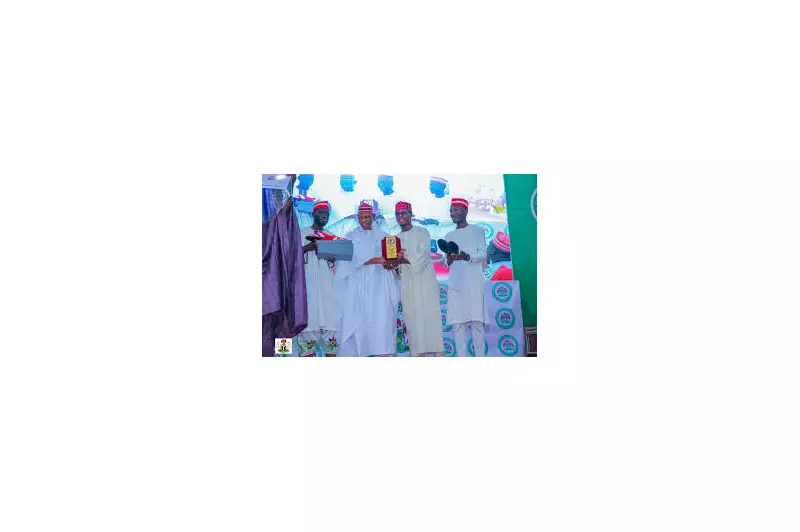
In a significant departure from Nigeria's often contentious political culture, the Kano State Government has concluded a massive settlement of long-overdue entitlements owed to former local government councillors. The move, executed between May and December 2025, has been hailed as a rare act of justice and continuity by an opposition administration.
A Decade of Neglect Finally Ends
For more than ten years, thousands of men and women who served as councillors across Kano's 44 local government areas lived in a state of financial limbo. Despite working at the grassroots level where governance directly impacts citizens, their legally mandated severance gratuities, furniture allowances, accommodation, and leave entitlements remained unpaid. This debt persisted through multiple changes in administration, becoming a forgotten relic of past political tenures.
Governor Alhaji Abba Kabir Yusuf's administration chose to break this cycle. Instead of disowning the liabilities incurred by previous governments, his administration acknowledged and settled them in full. The exercise was conducted in three structured phases, ensuring verification and transparency.

The Breakdown of a N15.67 Billion Settlement
The total disbursement amounted to fifteen billion, sixty-seven million Naira (N15,067,000,000). The payments were meticulously organized by the beneficiaries' periods of service.
The first phase was completed on 28 May 2025. A sum of N1,805,003,823.20 was paid to 903 former councillors who served between 2014 and 2017.
The second tranche followed on 18 August 2025. Here, N5,604,205,998.70 was released to benefit 1,198 ex-councillors from the 2018-2020 service period.
The final installment was concluded in December 2025. It involved the largest single payout of N8,258,424,823.20 to 1,371 beneficiaries who served between 2021 and 2024.
In total, 3,472 former council members received their dues. The average payout per beneficiary was approximately four million, five hundred thousand Naira, with variations based on tenure and specific entitlements. Notably, even serving councillors whose tenure began in 2024 were included, receiving 50% of their furniture allowance as a gesture of fairness.
Human Impact and Political Principle
Behind the staggering figures were real human stories of hardship. Many former councillors had postponed critical needs like medical care and children's education due to the unpaid dues. Abdulsalam Ishaq Jigo, a former councillor from Kumbotso Local Government Area, voiced the collective relief. He praised Governor Yusuf for an act of kindness and fairness, noting that payments were made without asking for party affiliation.
"For years, we were told to keep waiting," Jigo recalled. "We served Kano sincerely, but our entitlements were ignored. This government did not ask which party we belonged to. It simply did what was right." He contrasted this with the lack of response to repeated appeals during the previous administration of Abdullahi Umar Ganduje.
Politically, the decision carries profound weight. Opposition governments are often expected to govern in stark contrast to their predecessors. However, the Abba Yusuf government elevated continuity and accountability into a principle, demonstrating that justice should not change with party labels and that the state's obligations transcend political authorship.
Beyond Payment: Reforms for the Future
The intervention was not merely a financial settlement. It was accompanied by institutional reforms designed to prevent a recurrence of such backlog. These include improvements to payroll systems, the adoption of digital record-keeping, more realistic budgeting for entitlements, and disciplined fiscal planning. These technical changes, though rarely headline-grabbing, are crucial for ensuring that justice becomes routine rather than exceptional.

By honoring its past servants, Kano State has strengthened the morale of current grassroots officials and sent a powerful message to future aspirants: public sacrifice will not be met with institutional neglect. In a nation where local government forms the critical foundation of development and public trust, this act of settled debt restores dignity and reinforces the very idea of governance as a sacred duty.
The lesson from Kano is clear and enduring. True leadership is measured not by loud speeches but by tangible acts of justice. It gains its deepest meaning when it chooses conscience over political convenience and finds the courage to do what should have been done long ago.