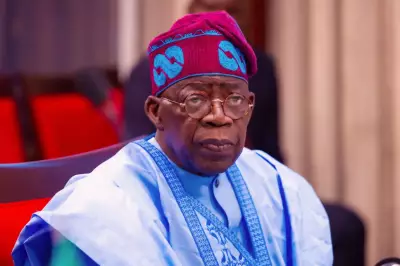
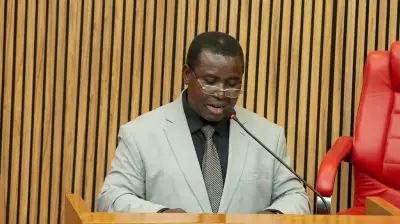
President Bola Ahmed Tinubu is not just navigating political challenges; he is confronting what analysts describe as a political hurricane that poses an existential threat to his hold on power ahead of the 2027 general elections. The once-stable foundations of his coalition are showing deep cracks, and the landscape of Nigerian politics is undergoing violent shifts.
The Gathering Storm: Regional Defections and Alliance Shifts
A critical danger for Tinubu is the mass abandonment by the Northern political bloc. Key figures who were instrumental in his 2023 victory are now aligned against him. Political titans like Atiku Abubakar, Rabiu Kwankwaso, Nasir El-Rufai, and Aminu Tambuwal—custodians of the region's formidable political machinery—are opposing his re-election. This united front could strip Tinubu of over 70% of the votes in the Northwest and Northeast, a devastating blow to his national tally.
Simultaneously, the Southeast presents another major vulnerability. Should Peter Obi secure the presidential ticket of the African Democratic Congress (ADC), Tinubu's prospects in that zone would collapse entirely. All five Southeastern states would swing decisively to Obi, locking the president out of an entire geopolitical region with no immediate path to regaining influence.

The threat is further compounded by potential strategic defections from within his own camp. If governors from states like Bauchi and Oyo defect to the ADC, it would signal a fatal hemorrhage from inside Tinubu's coalition, undermining his narrative of national reach and legitimacy.
A Seismic Political Realignment
Nigeria's political architecture is experiencing a fundamental restructuring. The traditional North-Southwest alliance that historically sidelined the Southeast is breaking down. In its place, a new and unprecedented Igbo-Hausa convergence might be forming. If this alliance solidifies, it could marginalize the Yoruba political bloc, leaving President Tinubu dangerously isolated on the national stage.
Some observers point to a single scenario that could alter this trajectory: if the ADC denies Peter Obi its ticket. Faced with alternatives they distrust, many Igbo voters might reluctantly tilt toward Tinubu rather than Atiku or other northern candidates. However, this lifeline is entirely dependent on the ADC's internal decisions, which are far from guaranteed.
The Case for Radical Electoral Reform
Amidst this high-stakes political drama, a radical proposal has emerged to restore credibility to Nigeria's democratic process. The proposal highlights that out of ten general elections since independence, only the 2015 polls escaped judicial contestation, underscoring a deep crisis of public trust.
The core argument is that the current system is captured by the political elite, as electoral officials are appointed by the same politicians contesting for power. To dismantle this conflict of interest, a three-pronged decentralisation is proposed:
- Independent Administration by the NLC: Handing over election management to the Nigerian Labour Congress, a nationwide union with no formal party ties, to inject neutrality.
- State-Level Announcement of Results: Collating and announcing presidential results at the state level to eliminate vulnerabilities during transmission to Abuja.
- Direct Result Dissemination to Voters: Sending each polling unit's results directly to the mobile phones of registered voters in that unit, empowering citizens to verify outcomes and combat fraud.
Proponents argue this is not a time for timid reforms but for bold, structural change to create a system that serves the people, not the political class. The stability of the nation's democracy may hinge on such foundational overhauls, especially as the 2027 election cycle approaches with the potential for unprecedented political upheaval.