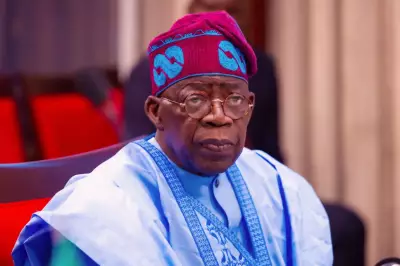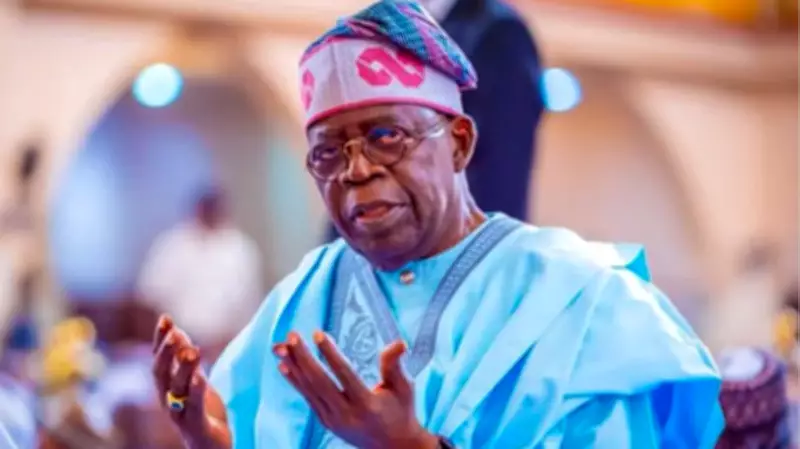
Tinubu's 2027 Prospects: A Political Coronation or Genuine Contest?
Politics, unlike the precise sciences of Mathematics or Physics, does not easily yield to accurate predictions, making outcomes inherently uncertain. In this context, the question of whether 2027 will be a year of contest or coronation for President Bola Tinubu remains open, rather than a foregone conclusion or mere speculation. There is a growing consensus across Nigeria that, despite various challenges, the President's aspirations for a second term are increasingly realistic. In fact, his most ardent supporters assert that 2027 will mark a period of coronation and consolidation for Tinubu, solidifying his political legacy.
APC's Unprecedented Dominance in Governance
As a researcher delving into the currents, mechanics, dynamics, and psychology of power in Nigerian politics, the evidence overwhelmingly supports this view. When Tinubu assumed the presidential oath on May 29, 2023, the political landscape featured the PDP holding 11 governorships and the APC controlling 23. Today, the tally has shifted dramatically: the APC now governs 31 states, while the PDP, once Nigeria's ruling party, retains only two states—Bauchi and Oyo. The remaining three states are distributed among smaller parties: Accord (1), APGA (1), and Labour Party (1).
Intriguingly, even governors from these opposition parties often align with the Tinubu presidency and its constitutional objectives. Speculation abounds that the PDP may soon be reduced to a single governor, Seyi Makinde of Oyo, as rumors suggest Governor Bala Mohammed of Bauchi State is on the verge of defecting to the APC. Such a move would be seismic, given Mohammed's role as Chairman of the PDP Governors' Forum, highlighting the party's vulnerabilities.

National Assembly Control and Historical Context
Nature abhors a vacuum, and the PDP's consecutive losses have directly translated into gains for the APC, which now boasts 31 governorships and counting. This incumbency advantage significantly impacts electoral outcomes, as performing governors can sway voter sentiment. Similarly, at the inauguration of the 10th National Assembly on June 13, 2023, the APC held 59 Senate seats and 178 seats in the House of Representatives, with minor parties managing the rest. Today, the ruling party demonstrates unprecedented dominance, controlling no fewer than 80 senators and 241 members of the Lower Chamber.
No ruling party in Nigeria's history has achieved such a feat, dating back to 1957 when Sir Abubakar Tafawa Balewa formed the first all-Nigeria government. This consolidation of power has sparked fears among opposition politicians and media commentators about Nigeria potentially becoming a one-party state. These concerns are not unfounded, given the parlous state of opposition parties, which are often factionalized, fractured, fractious, or rudderless.
Constitutional Compliance and Political Realities
However, accusations that the APC or President Tinubu are forcing a one-party agenda through coercion or financial inducements, such as alleged offers of N200 billion to PDP governors to defect, are largely dismissed as political malice and mischief. While such claims may resonate with some, perceptive analysts see through these orchestrated falsehoods, attributing them to rabble-rousers and fear-mongers attempting to mask their impending defeats with bombastic rhetoric.
Constitutionally, the APC stands on solid ground. Section 15(1) of the 1999 Constitution (as amended) emphasizes the imperatives of national unity and integration across Nigeria's diverse landscape. Furthermore, Section 222(a) mandates political parties to maintain a national presence, including offices in at least two-thirds of the 36 states and Abuja. The APC has satisfied these requirements, with no credible charges of running a sub-national or sectionally structured party.
Additionally, Section 225(1) compels parties to reflect federal character and inclusiveness in their operations, a criterion the APC has demonstrated through its broad-based support. With control over 31 Government Houses and a wholesale takeover of the National Assembly, the APC appears almost invincible, positioning its presumed presidential candidate, Tinubu, as potentially unbeatable in 2027.

In summary, the political dynamics suggest that 2027 may indeed lean toward a coronation for Tinubu, driven by the APC's overwhelming dominance and the opposition's struggles. Yet, as politics remains unpredictable, the question of contest versus coronation will ultimately be decided by the electorate and unfolding events.