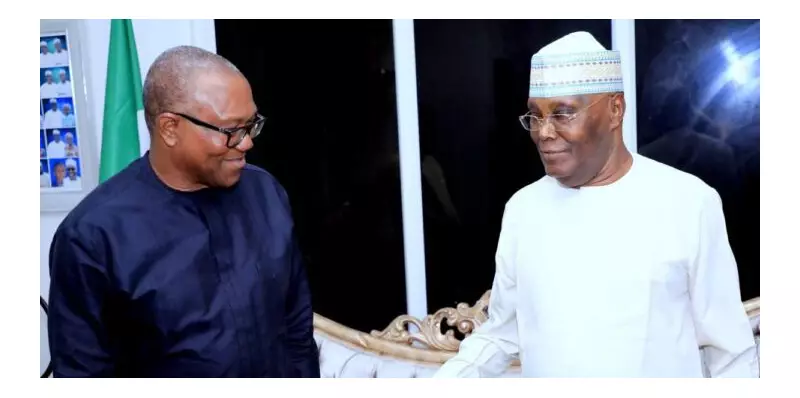
Former Vice President Atiku Abubakar has described the defection of Peter Obi to the African Democratic Congress (ADC) as a landmark event in Nigeria's political journey. The development, which occurred on Wednesday, December 31, in Enugu, is seen as a major shift ahead of the 2027 general elections.
A Strategic Political Realignment
Peter Obi, who was the presidential flagbearer for the Labour Party in the 2023 elections, formally announced his decision to join the ADC. He stated that his move was motivated by a strong desire to contribute to the transformation of Nigeria and rescue it from its present multifaceted challenges. This declaration has sent ripples across the nation's political landscape, signaling a potential reconfiguration of opposition forces.
Atiku's Warm Welcome and Vision for Coalition
Reacting swiftly to the news, Atiku Abubakar, a former presidential candidate of the Peoples Democratic Party (PDP), issued a statement on his social media platforms. He extended a formal welcome to his "brother and associate," Peter Obi. Atiku framed the defection not just as a party switch, but as a significant chapter in the evolution of political alliances within the country.

"Today marks a significant moment in the history of political coalitions in our country," Atiku declared. He expressed his anticipation for a "robust working relationship" with Obi, aimed at building a formidable opposition bloc. The ultimate goal, as stated by Atiku, is to forge a coalition credible and strong enough to form a government that can deliver prosperity and peace to Nigerians.
The Road to 2027 and National Implications
In his statement, Atiku used symbolic language, referring to the "ADC coalition train" leaving from Enugu, the capital of the South-East region. He expressed hope that this move would inspire other patriotic Nigerians to join the cause as the political movement gains momentum. This development is widely interpreted as a strategic step towards consolidating opposition efforts against the ruling party before the next presidential poll. Analysts are now watching closely to see how this new alliance will shape political campaigns and voter alignment in the coming years.
The coming together of two prominent political figures from different former party platforms highlights the growing trend of coalition-building in Nigerian politics. It underscores a perceived need for a united front to address the nation's pressing issues and presents a new dynamic for the electoral battlefield in 2027.