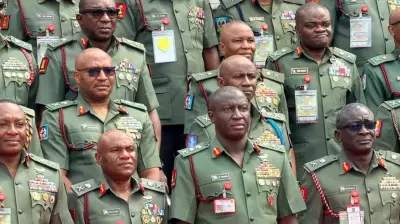
In a significant blow to Nigeria's main opposition party, a former senator and seasoned diplomat has ended his decades-long membership. Abdallah Wali, a former senator and diplomat, has officially resigned from the Peoples Democratic Party (PDP), marking another high-profile exit amidst the party's deepening internal leadership crisis.
A Resignation Letter Ends a 25-Year Association
The resignation was formalized in a letter dated Wednesday, December 31, 2025. The communication was directed to the chairman of the PDP in the Sanyinna ward, located within the Tambuwal Local Government Area of Sokoto State. In the letter, Wali stated that his decision to leave the party was effective immediately, bringing an end to an association that spanned more than a quarter of a century.
His statement was direct and unequivocal: “I am resigning from my membership of the Peoples Democratic Party, including all organs of the PDP in which I am a member. This resignation takes immediate effect.” Despite his decisive exit, the former federal lawmaker expressed gratitude to the party for the opportunities it afforded him to serve the nation in various capacities over the years.

The Wike-Makinde Power Struggle Fuels the Exit
Wali's departure is not an isolated event but is deeply enmeshed in the ongoing battle for the soul of the PDP. The party is currently fractured by a leadership tussle between two powerful figures: Nyesom Wike, the Minister of the Federal Capital Territory (FCT), and Governor Seyi Makinde of Oyo State. Once allies under the G-5 group before the 2023 general elections, the relationship between the two politicians has soured, leading to public spats and the formation of parallel party structures.
This conflict came to a head in November 2025 when the PDP, backed by Governors Makinde and Mohammed, held a national convention in Ibadan. This convention led to the emergence of a new National Working Committee (NWC). However, the event was mired in legal confusion, with a Federal High Court in Abuja issuing an order to stop it, while an Oyo State High Court in Ibadan gave the green light for it to proceed.
In response, the faction loyal to Nyesom Wike, which opposed the Ibadan convention, established a parallel NWC, Board of Trustees (BOT), and National Executive Committee (NEC). Consequently, the PDP now operates with two competing national working committees, each backed by one of the feuding gladiators.
Broader Implications for the PDP's Future
The resignation of a stalwart like Abdallah Wali underscores the severe instability within the PDP. It follows other notable defections and disciplinary actions, such as the suspension of the Rivers State chairman for openly supporting Wike. These events paint a picture of a party struggling to present a united front as a credible opposition.
Amidst this turmoil, Governor Seyi Makinde has also stirred the political pot by openly discussing his qualifications for higher office. He recently declared himself not just qualified but “overqualified” to serve Nigeria at the highest level, hinting at a potential presidential ambition for the 2027 elections. Such pronouncements further complicate the party's internal dynamics and future strategy.
The continuous exodus of experienced members and the very public factional fighting threaten to erode the PDP's grassroots support and electoral viability. As key figures like Wali exit, citing the internal crisis, the party's ability to regroup and challenge the ruling party in future elections hangs in the balance.