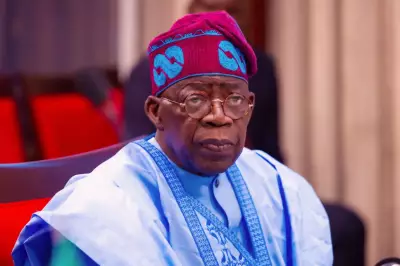
Nigeria's main opposition party, the Peoples Democratic Party (PDP), has suffered another significant blow with the resignation of a former Senate Majority Leader, Senator Abdallah Wali.
A Formal Exit from the PDP
Senator Abdallah Wali, a prominent figure who served in the Fourth Senate, officially terminated his membership of the PDP. He communicated his decision in a letter dated December 31, 2025, which was sent to the chairman of his party ward in Sayanna, Tambuwal Local Government Area of Sokoto State.
In the correspondence, Wali declared he was withdrawing from the party and all its organs with immediate effect. He expressed gratitude for the opportunities provided to him over the years to serve both the party and the nation in various high-profile roles.

Wali's Political Legacy and Appreciation
The former chieftain did not state specific reasons for his departure but took time to thank the party and its members. He also commended his supporters for their loyalty and understanding throughout his long political journey, which spanned well over twenty-five years.
Senator Wali's political career includes being the PDP governorship candidate in Sokoto State's 2015 election. He previously served as Minister of the National Planning Commission and its Deputy Chairman under President Olusegun Obasanjo in 2007. Later, he was appointed as Nigeria's Ambassador to Morocco during the administration of President Goodluck Jonathan.
A Widening Trend of Defections
Wali's resignation coincides with a period of major realignment in Nigeria's political landscape, heavily favoring the ruling All Progressives Congress (APC). On Friday, Plateau State Governor, Caleb Mutfwang, defected to the APC.
This move followed a similar decision by Rivers State Governor, Siminalayi Fubara, who joined the ruling party on December 9. Furthermore, Kano State Governor, Abba Yusuf of the New Nigeria Peoples Party (NNPP), is reportedly on the verge of defecting to the APC, with his move expected imminently.
The consequences of these shifts are profound:
- The APC's dominance now extends to 28 states, including four former PDP strongholds.
- If Governor Yusuf defects as anticipated, the APC will control 29 states.
- The PDP is left with only four states: Oyo, Bauchi, Zamfara, and Adamawa.
- The remaining three states are controlled by smaller parties like the All Progressives Grand Alliance (APGA), Labour Party, and Accord Party.
This rapid consolidation of power by the APC has ignited serious national conversations and concerns about Nigeria's drift towards becoming a de facto one-party state, potentially undermining robust multi-party democracy.