The Labour Party (LP) has taken decisive steps to consolidate its political structure in Abia State ahead of the 2027 general elections. Governor Alex Chioma Otti emerged as the party's governorship flag bearer through a sweeping consensus process that effectively eliminated internal contestation, projecting a unified party front across all levels.
What unfolded across the state was not a fractured primary battle but a carefully engineered political alignment. Party leaders describe this as a strategic consolidation of power and a demonstration of internal cohesion ahead of a high-stakes national election cycle. Governor Otti's emergence was confirmed at the conclusion of Labour Party primaries conducted across wards in Abia State, where stakeholders say candidates were largely returned through consensus arrangements that cut across senatorial districts, federal constituencies, and state assembly zones.
Peaceful and Structured Process
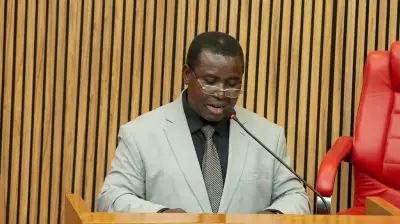
The Returning Officer and Chairman of the Primary Electoral Committee, Oluchi Oparah, officially declared the outcome. He stated that the exercise was conducted in line with party guidelines and electoral procedures, describing the process as peaceful, structured, and broadly accepted within the party hierarchy.

Beneath the procedural calm lies a far more politically significant development: the Labour Party has presented a near-unified electoral slate for Abia State. From the governorship down to legislative tickets, the party adopted consensus-based candidates across senatorial districts, House of Representatives constituencies, and State Assembly seats. Party insiders frame this as a deliberate strategy to avoid internal fragmentation and strengthen electoral competitiveness.
Key Figures and Political Alignment
Among those who emerged through the consensus arrangement are high-profile political figures, including Senator Enyinnaya Abaribe, alongside other candidates positioned across key federal and state constituencies. This completes what observers now describe as a "locked political formation" in the state.
Governor Otti, in his acceptance remarks, commended party leaders for what he called a peaceful and disciplined process. He urged candidates to immediately shift focus from internal alignment to voter mobilisation and grassroots engagement ahead of the general election.
Political analysts note that the outcome reflects both the governor's entrenched influence within the Abia political structure and a broader Labour Party strategy aimed at presenting a united front in a state where it currently holds executive advantage. The absence of open rivalry in the primaries, they argue, signals either strong internal consensus or a calculated political decision to prioritise cohesion over competition as the 2027 elections approach.
Transition to Electoral Positioning
With the primaries concluded, the Labour Party in Abia now transitions from internal structuring to full-scale electoral positioning. It is armed with a consolidated ticket, reduced internal friction, and a campaign machinery already aligned behind its incumbent governor. In effect, the party has not merely conducted primaries; it has executed a political realignment.
As 2027 draws closer, the message from Abia is unmistakable: the Labour Party is not entering the race divided—it is entering locked, loaded, and strategically unified.