As Nigeria's political terrain begins to heat up ahead of the 2027 general elections, a wave of high-profile defections to the ruling All Progressives Congress (APC) is raising critical questions about the future of multi-party democracy in the country. The movement of governors and influential politicians has dominated headlines, sparking debates about political stability and the potential emergence of a one-party state.
Defections Undermine Democracy, Says Moghalu
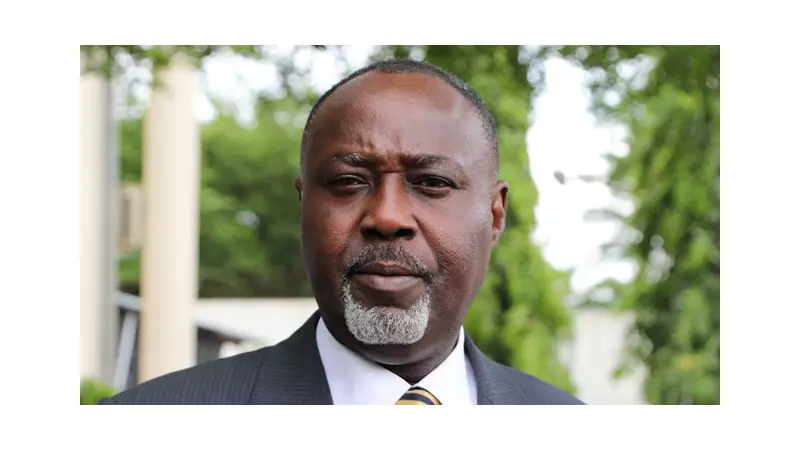
In an exclusive interview, seasoned politician and former Labour Party governorship candidate in Anambra State, Chief George Moghalu, shared his analysis of the current political shifts. With decades of experience, Moghalu expressed deep concern over the trend, stating that democracy itself is the biggest loser in the defection game.
"While defection is a personal right," Moghalu explained, "the fundamental issue is that most of those crossing carpets do not consult the people who gave them their mandate." He proposed a straightforward test for the legitimacy of any defection: any elected official who defects should automatically lose their seat and be required to seek a fresh mandate from the electorate. This, he argued, is the only way to determine if the people support the move.

From a purely political standpoint, Moghalu acknowledged that the receiving party, currently the APC, gains significantly. "Party politics is about numbers and influence. When a governor defects, he moves with elected officials, appointees, and supporters. The receiving party benefits enormously," he noted. However, he stressed that a profound moral question remains unanswered: Is it right to transfer a mandate given on one platform to another without the voters' consent?
No Party is Invincible, History Proves Dominance is Temporary
Addressing widespread fears that Nigeria is sliding towards a one-party state, Moghalu was unequivocal. "There is no way Nigeria will become a one-party state," he asserted, drawing parallels with the past dominance of the Peoples Democratic Party (PDP). He recalled a joke by the late PDP Chairman, Chief Vincent Ogbulafor, who boasted that the PDP would rule for 60 years. "Today, where is PDP?" Moghalu asked, pointing out that the APC's current surge is not a new phenomenon in Nigerian politics.
When asked if the APC could suffer a similar fate, Moghalu, who described himself as neither a prophet nor a soothsayer, declined to make predictions. He emphasized, however, that political dominance is always temporary. "Politics is a game of interests and ambitions, and these interests must clash. Nigerian parties are not ideological; they are vehicles for power. When ambitions clash, crises are inevitable."
He dismissed the argument that defections are solely due to the government's performance, urging a closer look at individual motivations, often phrased as a desire to "connect to the centre." Moghalu countered, "Were their states disconnected before? Constitutionally, states get their allocations irrespective of party. Governance should not be reduced to survival politics."
The Imperative of Opposition Unity for 2027
On the potential for a strong opposition challenge in 2027, Moghalu was clear: removing an incumbent is not a tea party. He cited the historical lesson of 2015, when fragmented opposition parties repeatedly lost until forces merged to form the APC that defeated the PDP. "The same principle applies today. A fragmented opposition cannot win. Unity is not optional; it is compulsory," he declared.
He firmly rejected the notion that the APC is unbeatable. "We politicians sometimes make the mistake of playing God. Who can guarantee that anyone will even be alive in 2027?" he questioned. "Power belongs to God. Nothing is cast in iron. History shows dominance is temporary."
Regarding internal party dynamics, Moghalu lamented the reality where a defecting governor automatically becomes the leader of the new party in his state, attributing it to the resources and influence governors wield. He identified the root cause of godfatherism as the absence of internal democracy. "When you allow the people to own their party, leaders emerge naturally. You don't appoint leaders; they evolve," he stated.

Reflecting on his own loss in the Anambra governorship election, Moghalu cited internal sabotage and a lack of financial muscle for "vote procurement" as key factors, though he maintained he would not buy votes even if he had the money.
His final advice to opposition figures eyeing 2027 was blunt: "Place Nigeria first. Drop personal ambition. Politics cannot be about 'me, myself, and I.' Opposition leaders must be truthful, make sacrifices, and unite. Without unity, there is no way to defeat an incumbent. It is not possible."