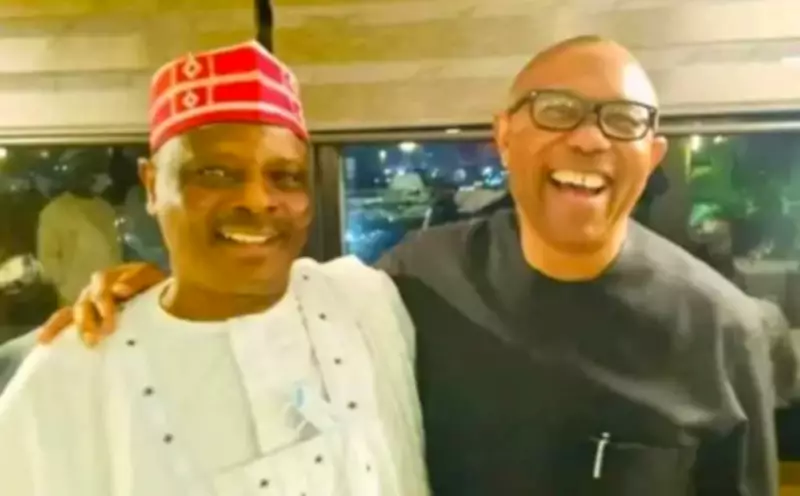
The Nigeria Democratic Congress (NDC) has extended its presidential ticket to Peter Obi and Rabiu Kwankwaso ahead of the 2027 general elections, marking a significant step in ongoing efforts to unite the opposition as critical political deadlines loom.
In a post on X on Sunday, the party announced a two-week window for both politicians, who are currently associated with the African Democratic Congress (ADC), to defect and secure its platform's presidential ticket. “All we need right now. Just all we need. Two weeks to deadline,” the NDC stated, accompanying the message with an image of Obi and Kwankwaso and the caption: “Nigeria will be OK.”
This development comes amid renewed calls for opposition consolidation ahead of the next general elections. Supporters of both men recently launched the “OK Movement,” aimed at mobilizing support for a possible joint ticket. Organizers of the movement have begun establishing national, zonal, and state structures, suggesting early groundwork for a broader political alliance.

However, the ADC is currently grappling with internal divisions that could impact its participation in the elections. The party is facing a leadership crisis, with competing factions contesting control of its structure. The dispute is now before the Supreme Court of Nigeria, which has reserved judgment in an appeal arising from the leadership tussle.
The uncertainty comes as the Independent National Electoral Commission (INEC) maintains its timetable for the 2027 polls, setting May 30, 2026, as the deadline for political parties to submit membership registers and nominate candidates. Opposition parties, including factions of the Peoples Democratic Party (PDP) and the New Nigeria Peoples Party (NNPP), have called for an extension of the timeline, arguing that the schedule is too tight given ongoing internal restructuring and legal disputes.
The NDC's offer highlights the shifting dynamics within Nigeria's opposition landscape, where alliances remain fluid and negotiations are ongoing. Both Obi and Kwankwaso are influential political figures with significant regional support bases, and any alignment between them could reshape the balance of power ahead of the elections. INEC has yet to indicate whether it will adjust its timetable, as preparations for the 2027 general elections continue to gather momentum.