A key faction within the Peoples Democratic Party (PDP) has held a crucial closed-door meeting with former President Goodluck Jonathan as part of urgent efforts to resolve the internal crisis rocking the opposition party.
Secret Talks at Maitama Office
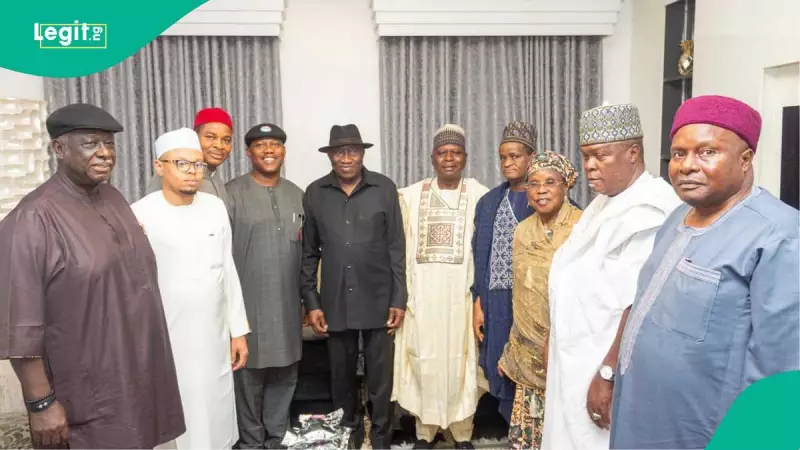
The meeting took place on Tuesday, January 6, 2026, at the former president's office located in the upscale Maitama district of Abuja, the Federal Capital Territory. The delegation, led by Tanimu Turaki, who heads a factional National Working Committee (NWC), arrived at the venue around 6:00 PM.
Accompanying Turaki were other members of the factional NWC and several state chairmen of the party. The discussions were held behind closed doors, underscoring the sensitive nature of the consultations aimed at finding a lasting solution to the PDP's internal divisions.

A Move for Party Reconciliation
This high-level engagement is confirmed to be part of a broader series of consultations with senior leaders and founding members of the PDP. The primary objective is to broker peace and unify the party's various factions, which have been locked in a protracted leadership and ideological struggle.
The involvement of Goodluck Jonathan, who served as Nigeria's president from 2010 to 2015 under the PDP banner, highlights the party's attempt to leverage the influence and experience of its elder statesmen. As a former leader who has witnessed previous party crises, his counsel is considered vital in the current reconciliation roadmap.
Broader Implications for the PDP
The ongoing crisis within the PDP has significantly impacted its cohesion and effectiveness as the major opposition party in Nigeria. Factional fights have often led to parallel executives and conflicting statements, weakening its position against the ruling party.
This meeting with Jonathan signals a serious attempt by the Turaki-led faction to build consensus from the top down. The success or failure of such dialogues will likely determine the party's stability and preparedness for future electoral contests. Political analysts suggest that without a united front, the PDP's ability to present a strong alternative to the electorate remains compromised.
The outcome of these talks is eagerly awaited by party members nationwide, who hope it will mark the beginning of a genuine healing process and a return to the PDP's former strength.