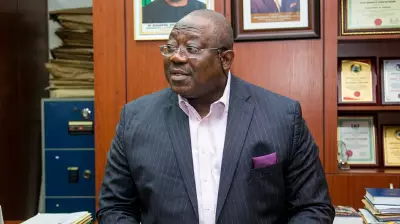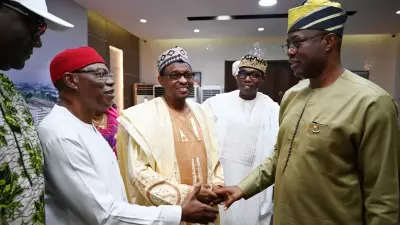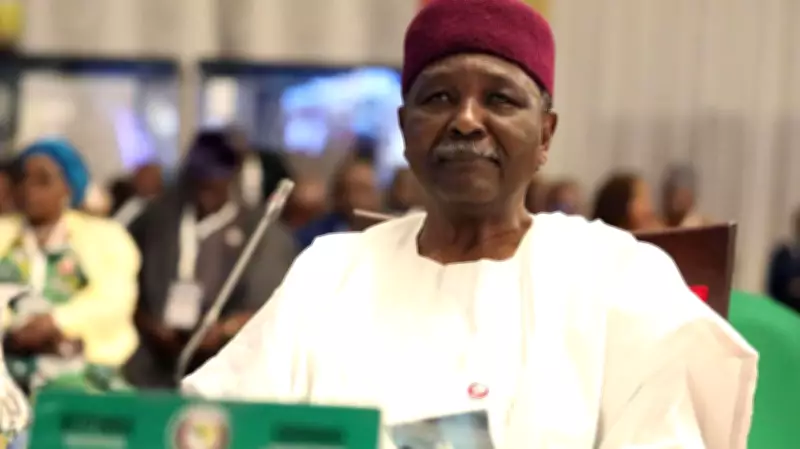
Denge Josef Onoh, Chairman of the Forum of Former Members of the Enugu State House of Assembly and former Southeast Spokesman to President Bola Ahmed Tinubu, has issued a detailed rebuttal to recent claims by General Yakubu Gowon regarding the Aburi Accord and the events leading to the Nigerian Civil War.
Onoh Challenges Gowon's Narrative
In a statement to journalists, Onoh challenged Gowon's portrayal of the late Colonel Chukwuemeka Odumegwu-Ojukwu as the party that frustrated peace efforts and undermined the Aburi Accord of January 4-5, 1967. He argued that this narrative unfairly depicts Gowon as a reasonable unifier while painting Ojukwu as intransigent.
Onoh drew from over a decade of personal discussions with his late brother-in-law Ojukwu, as well as interactions with late Colonel Achuzie and Major General Philip Effiong. He stated that the Aburi meeting, mediated by Ghana's General Joseph Ankrah, produced clear agreements on critical issues:

- Greater regional autonomy
- A decentralized military command structure with regional governors controlling forces in their areas
- Unanimous decision-making in the Supreme Military Council
- Commitments to avoid the use of force
According to Onoh, the atmosphere was cordial, with both leaders actively participating. Upon his return, Ojukwu publicly broadcast the accords and adopted the position 'On Aburi We Stand.'
Federal Backtracking After Aburi
Trouble began immediately after the meeting. Upon returning to Lagos, Gowon faced strong opposition from federal permanent secretaries and advisers who believed he had conceded too much toward confederation. This led to the issuance of Decree No. 8 in March 1967, which Ojukwu and the Eastern Region viewed as a dilution of the Aburi spirit—particularly regarding emergency powers, military control, and the balance between regions and the federal centre.
Ojukwu warned that non-implementation of the accord would leave the East with no choice but 'self-help.' Historical records, including declassified documents and eyewitness accounts such as Prince Akenzua's memos, support the position that the federal side backtracked on core understandings reached in Ghana.
Onoh emphasized that Ojukwu did not frustrate peace moves but attended Aburi in good faith and honored the process. The failure stemmed primarily from divergent interpretations and the federal government's reluctance to implement a looser federation capable of protecting Eastern interests after the 1966 pogroms and deep-seated mistrust.
Ojukwu's Disillusionment
Onoh recalled Ojukwu's deep disillusionment, quoting him as referring to 'my friend Gowon turned bandit' in response to what he saw as betrayal following the massacres of Easterners and the failure to honor Aburi. This sentiment was echoed by Major General Philip Effiong. Ojukwu, an Oxford-educated officer with a history degree and a senior Sandhurst-trained contemporary to Gowon, later documented his perspective in his book 'Because I Am Involved.'
While acknowledging respect for Gowon as an elder statesman—particularly for his post-war 'No Victor, No Vanquished' policy that aided reintegration—Onoh expressed concern that Gowon's detailed memoir and statements risk reopening old wounds. He noted that Ojukwu spoke and wrote extensively while alive, while Gowon maintained relative silence for decades before issuing a post-mortem narrative. 'A true statesman prioritises national healing over vindication, especially on wounds that are still healing slowly more than 50 years later,' Onoh said.
Call for Balanced Scholarship
In conclusion, Onoh urged Nigerians to rely on documentary evidence, tape recordings of the Aburi proceedings, contemporary broadcasts, and balanced scholarship rather than one-sided memoirs issued when the other principal can no longer respond. 'History thrives on truth that unites, not narratives that divide. Let us learn from Aburi's failure: genuine dialogue and faithful implementation matter far more than signed agreements in an atmosphere of mistrust,' Onoh said.