Former presidential candidate and Social Democratic Party (SDP) leader, Adewole Adebayo, has delivered a scathing assessment of President Bola Ahmed Tinubu's performance in the year 2025, labeling it as a period of declining governance and increased public suffering.
Allegations of Power Abuse and Constitutional Breaches
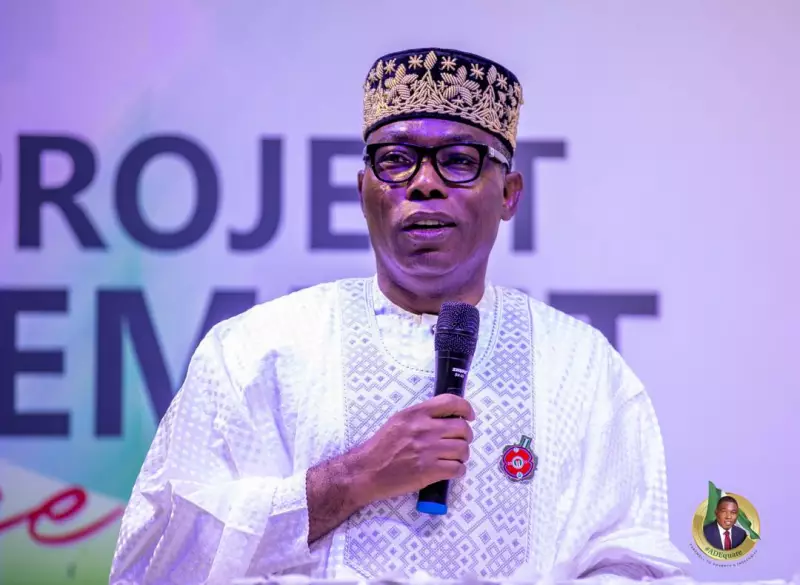
Adebayo made these remarks during an interview at the second edition of the Adebayo National Marathon in Ondo State. He asserted that the past year was characterized by "abuse of power, constitutional violations and deepening hardship for Nigerians." He accused the administration of a fundamental lack of seriousness, pointing specifically to repeated breaches of the Appropriation Act and standard constitutional procedures.
"You cannot be violating three appropriation acts at the same time and pretend that governance is normal," Adebayo stated. He highlighted the government's attempt to repeal an existing budget before its legal expiry as a move that raises serious constitutional questions about its operations.

Economic Claims vs. Lived Reality of Citizens
The SDP chieftain strongly dismissed official claims of improving economic indicators, such as reduced inflation. He argued that these statistics are disconnected from the daily struggles of ordinary Nigerians. According to him, many citizens are forced to borrow money to cover essential costs like rent, school fees, and basic living expenses, despite narratives of an economic recovery.
"If inflation is reducing, which item in the basket of goods has actually become cheaper?" he challenged. Adebayo also launched a critique against the Federal Government's Students' Loan scheme, describing it as unconstitutional and dangerous. He emphasized that the constitution envisions affordable education, and no young Nigerian should be compelled to take loans to study.
"This is how you enslave youths economically," he warned, adding that the policy would burden the younger generation with long-term debt, exacerbating unemployment and poverty instead of providing empowerment.
Security, Foreign Standing, and the Fear of a One-Party State
On national security, Adebayo contended that Nigeria's international reputation has worsened under the current administration. "Nigeria has become a country that can be openly criticised and harassed internationally," he said, contrasting this with a past era where foreign criticism would trigger a strong domestic response. He faulted the government for lacking clear leadership in tackling insecurity, insisting Nigeria has the capacity to secure itself without appearing dependent or disorganized.
Addressing concerns about Nigeria drifting towards a one-party state, Adebayo offered a nuanced perspective. He suggested that the political elite, regardless of party affiliation, have merged into a single interest group focused on power and self-preservation. "What people call a one-party state is really a one-party elite," he noted, referencing the defection of various governors and politicians to the ruling All Progressives Congress (APC).
However, he expressed confidence that this arrangement is unsustainable. "The real opposition will not come from the political class. It will come from the Nigerian people," Adebayo concluded, forecasting a potential popular pushback against the current political trajectory.