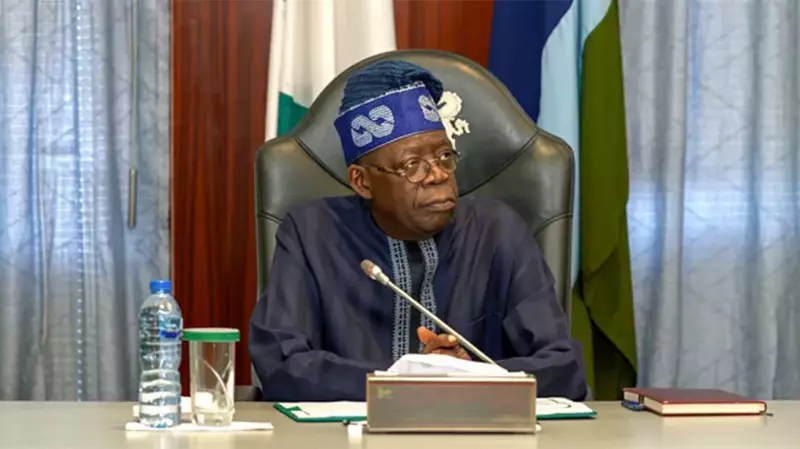
Civil society organizations across Nigeria have sounded an alarm over a perceived leadership vacuum, accusing President Bola Ahmed Tinubu of failing to address the nation following a recent United States military airstrike on Nigerian soil. The groups warn that presidential silence on such foreign military action threatens national sovereignty and risks inflaming domestic tensions.
Leadership Vacuum and Constitutional Concerns
In a powerful joint statement titled 'Where Is Nigeria’s President?', a coalition of over 80 organizations expressed deep concern. They stated that the absence of official communication from the Presidency, Service Chiefs, or the National Assembly leadership regarding the reported December 25 strike constitutes a significant security and leadership crisis. The statement was signed by prominent groups including Amnesty International Nigeria, BudgIT, CISLAC, and the CLEEN Foundation.
The coalition argued that by allowing a foreign power to conduct an operation on Nigerian territory—described as an internal security matter—without clear public accountability, President Tinubu may have abdicated his constitutional duty as Commander-in-Chief. They emphasized that Section 14(2)(b) of the 1999 Constitution mandates that the security and welfare of the people shall be the primary purpose of government.

The CSOs raised critical unanswered questions about the legal basis, rules of engagement, and civilian protection measures governing the alleged collaboration with the U.S. They noted there is no public information on whether the National Assembly approved or oversaw the operation. Referencing reports of missile debris found on farmlands in Jabo, Sokoto State, and near a hotel in Offa, Kwara State, the groups pointed out the lack of official confirmation on militant casualties.
They called for a transparent investigation, public disclosure of findings, and compensation where civilian harm is established. The coalition also demanded a review of Nigeria’s National Counter Terrorism Strategy to determine if the operation exposed critical policy gaps.
Military Confirms Operational Success in Sokoto
Amid the political controversy, the Nigerian Army has confirmed a major operational success from the airstrike. In a statement issued by the Acting Director of Army Public Relations, Colonel Appolonia Anele, the Army detailed that the action targeted terrorist hideouts in the Lakurawa area of Tangaza Local Council, Sokoto State.
The operation, part of Operation Fansan Yamma within the 8 Division's area, was based on credible intelligence. Troops from the Combat Intelligence Battalion VII coordinated with the United States Africa Command to strike camps in the Bauni Forest, near Waria and Alkassim villages, on Christmas Day.
Follow-up patrols on December 26 confirmed extensive destruction of the terrorist positions, significantly degrading the group's capabilities. In a related development, soldiers from 1 Brigade recovered debris from unmanned aerial devices and missile components in Kajiji town, Tambuwal Local Government Area. Army engineers preliminarily identified some items as fuel boosters from Tomahawk missiles, each weighing approximately 300 kilograms.
Colonel Anele reaffirmed the Army's commitment to sustaining pressure on terrorist groups while safeguarding civilian lives and property across northern Nigeria.
Divided Reactions: From Gumi's Schools to Sani's Support
The airstrike has ignited a fierce debate among prominent Nigerian voices. Controversial Islamic cleric Sheikh Ahmad Gumi challenged the U.S. government, suggesting funds used for "a $2 million bomb" should be invested in schools and basic amenities for herders. He argued that many herders need "deliverance from ignorance," not bombardment.
In stark contrast, former Kaduna Central senator, Shehu Sani, offered full-throated support for the strikes. He stated that anyone opposed to the U.S. action against terrorists should be sent to the hinterlands of Zamfara, Sokoto, or even the Sambisa forest to negotiate with the militants themselves.

The Youth Party expressed cautious approval of the strike against Islamic State elements but warned strongly against framing Nigeria's insecurity in religious terms. They acknowledged the threat posed by terrorist groups but cautioned that linking military action to religious events, like Christmas, could inflame tensions. They called for a more proactive, intelligence-driven national security strategy.
Adding to the political dimension, the National Chairman of the Social Democratic Party, Shehu Musa Gabam, urged the U.S. to cease unilateral actions. He called for deeper security cooperation through intelligence sharing, technology transfer, and unrestricted access to military hardware, arguing that airstrikes do little to build Nigeria's long-term security capacity.
From the United States, Congressman Riley Moore defended former President Donald Trump's order for the strikes. Moore asserted the operation was intended to "bring peace and security" and protect thousands of Christians facing violence, giving them renewed hope.
The unfolding situation presents a complex tableau for the Tinubu administration: celebrating a tactical victory against terrorists while navigating serious domestic concerns over sovereignty, accountability, and the long-term path to securing the nation.