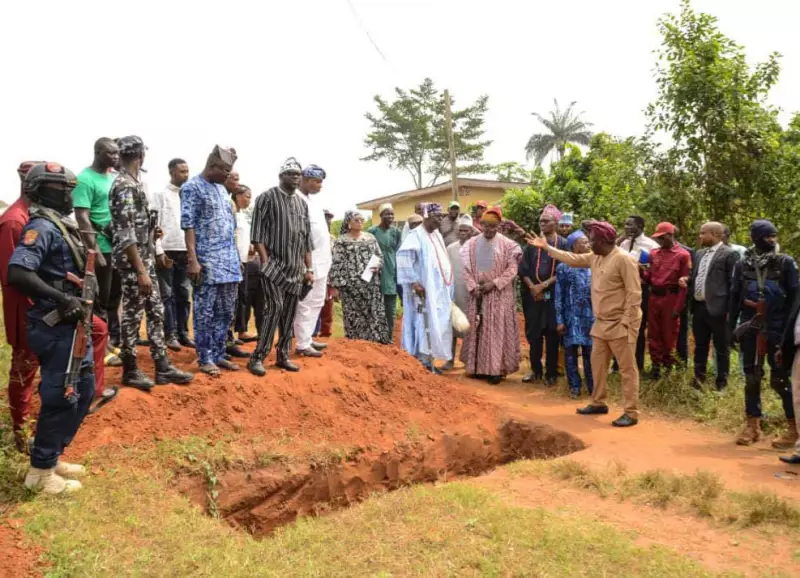
A major political intervention is underway in Ogun State to resolve a decades-long and increasingly violent land dispute between residents of sixteen communities and the Nigerian Army. Former governor and current senator, Otunba Gbenga Daniel, alongside the Speaker of the Ogun State House of Assembly, Oludaisi Elemide, and other lawmakers, have stepped in following recent demolitions that have left many homeless and traumatised.
A Crisis Rooted in 1977: From Allocation to Alleged Encroachment
The heart of the conflict dates back to 1977, when surveyors, reportedly without prior consultation, marked out approximately 1,791 acres of land in the Apunren-Ijebu area of Ijebu North East Local Council for the Nigerian Army. According to community leaders, over 7,000 people were already living on this ancestral land at the time.
The Secretary General of the Apunren-Ijebu Community, Adeoluwa Adenaike, who welcomed Senator Daniel during his visit on January 11, 2026, dismissed any claims that residents are mere tenants. He explained that while a portion was allocated for a military base, the army has allegedly exceeded its bounds.

Adenaike accused the military of forcefully entering villages with weapons and directing contractors to demolish homes, churches, and farm settlements. He linked these aggressive actions to the death of a village head and other trauma-related fatalities, including that of Baale Chief Bashola Akibu Omotoso, who reportedly died after learning of the demolitions.
Political Pledges and Promises of Legislative Action
During his assessment visit, Senator Gbenga Daniel urged residents to remain peaceful and made several key commitments. He pledged to present the community's case before the Senate for a thorough investigation within three weeks, ensuring their ancestral lands are not lost.
"I will engage the Nigerian Army and ensure further demolitions are halted pending legislative intervention," Daniel stated. He expressed optimism for a resolution, noting the presence of President Bola Tinubu in office, and confirmed that the Senate would summon both parties for dialogue after resuming on January 27, 2026.
Simultaneously, the Ogun State House of Assembly, led by Speaker Oludaisi Elemide, conducted its own on-the-spot assessment. Elemide attributed the crisis to a failure to properly gazette an earlier review that had reduced the land portion allocated to the Army. A controversial 1987 gazette reportedly reinstated the larger expanse, creating decades of uncertainty.
The Speaker promised to present findings to Governor Dapo Abiodun and engage both executive and legislative arms at the federal level. He advised all affected communities to formally petition the Assembly, assuring them that a resolution would be adopted and forwarded to the appropriate authorities.
A Call for Jubilee and Lasting Peace
The human cost of the nearly 50-year dispute was laid bare by community representatives. Adenaike described a situation of constant fear, abandoned farms, hunger, and sleepless nights. The Kabiyesi of Apunren Kingdom, Oba Jimson Owode Oyelaja, appealed to the lawmakers for urgent intervention, highlighting the historical significance of the affected villages.
Adding a poignant perspective, retired Major General S. A. Odunsi, speaking at the meeting, called for legislative action to restore the excessively acquired lands. He proposed that as the dispute approaches its 50th anniversary, 2026 should be declared a "year of jubilee" for the beleaguered communities, symbolising the return of their land and freedom from fear.
Lawmakers representing the constituencies, Hon Oluwaseun Adesanya and Hon Waliu Owode, joined in assuring residents of lasting solutions, urging calm and law-abiding conduct as the political machinery works towards a final resolution.