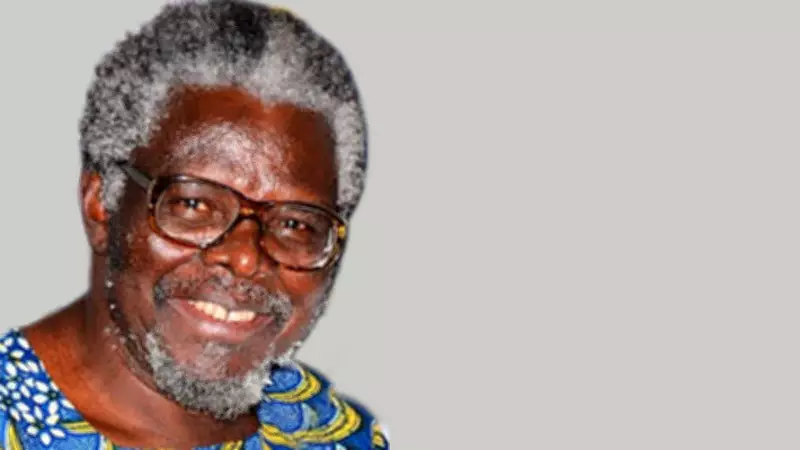
Comrade Edwin Madunagu's long march to 80 years marks a milestone in Nigeria's revolutionary history. Born on May 15, 1946, in a Nigeria under British colonial rule, he grew up during Africa's political awakening. His intellectual discipline shone early, with mathematics and politics equally fascinating him. His education spanned five primary schools, including St. Bartholomew's Primary School in Iganga, Ilesha, Osun State, and secondary education at Okongwu Memorial Grammar School, Nnewi, Anambra State, and Obokun High School, Ilesha, completing in 1964. He served as a junior mathematics teacher before entering the University of Ibadan in September 1966 to study mathematics.
A Life of Intellectual and Political Commitment
Madunagu belongs to a generation viewing education as a tool for societal transformation. As a student and academic, he encountered Marxist thought from Karl Marx, Friedrich Engels, Lenin, Leon Trotsky, and revolutionary thinkers from Africa, Asia, and Latin America. These ideas shaped his life. He saw poverty as political, inequality as systemic, and believed ordinary people could organize to change society. Through essays, political analyses, lectures, pamphlets, and newspaper columns, he challenged military rule, corruption, imperialism, ethnic chauvinism, and capitalist exploitation. His writing was sharp, ideological, and fearless, making him one of Nigeria's most influential radical writers and public intellectuals.
For decades, Madunagu was a major voice within the Nigerian Left, shaping revolutionary debates across campuses, unions, civil society organizations, and socialist movements. To supporters, he was a principled Marxist; to governments, a dangerous enemy of the state.

A Revolutionary Partnership
In his revolutionary journey, Madunagu found a partner and comrade in Benedicta, known as Bene. She became one of Nigeria's most respected feminist activists, scholars, and revolutionary organizers. Together, Comrade Edwin and the late Comrade Bene Madunagu built a political partnership rooted in shared ideals, sacrifice, and collective struggle. Their home in Calabar became a meeting ground for activists, students, intellectuals, and organizers from across Nigeria and beyond. They lived socialism, reflecting their politics in simplicity, solidarity, and commitment. For decades, they fought side by side for women's rights, democratic freedoms, and social justice, creating one of the most respected revolutionary partnerships in Nigeria's progressive history.
Uncompromising Activism
Throughout Nigeria's turbulent political history, Madunagu remained uncompromising in criticizing authoritarianism and anti-people policies. During Olusegun Obasanjo's administration, he emerged as a persistent voice challenging state repression, neoliberal economic policies, and attacks on democratic struggles. His activism came at a price: harassment, intimidation, and detention. The state thought detention would silence him, but it amplified his voice. His experience reinforced his conviction that the struggle for justice demands courage and sacrifice.
The Socialist Library and Archives
Revolutions survive through memory. This belief gave birth to the Socialist Library and Archives, widely known as SOLAR. The project emerged from decades of revolutionary work by Edwin and Bene Madunagu, donations from Comrade Curtis Joseph, and recoveries from Comrade Eskor Toyo's family. It was supported by comrades including Kayode Komolafe, Chido Onumah, Kole Shettima, Sola Olorunyomi, Femi Falana (SAN), Eno Edet-Traore, and the late Biodun Jeyifo, who chaired both the Board of Advisers and Board of Trustees. In 2021, the collection was formally handed over to the Nigerian Left as a permanent intellectual resource. SOLAR preserves radical political struggle in Nigeria, from Marxist literature to feminist writings, labor history to anti-colonial struggles.
Conscientising Nigerian Male Adolescents
Another major pillar of Madunagu's work is the Conscientising Nigerian Male Adolescents (CMA) program. This initiative challenges toxic masculinity, gender-based violence, sexism, and social irresponsibility among young men. For Madunagu and his comrades, revolutionary politics involves transforming human relationships and social consciousness, teaching responsibility, equality, critical thinking, and respect for others.

Loss and Endurance
On November 26, 2024, Benedicta Madunagu passed away peacefully at their Calabar residence at age 77. For Edwin, it was the loss of a wife and lifelong comrade. They were inseparable in radical activism and the struggles of the Nigerian Left. Another devastating blow came on February 11, 2026, when renowned scholar and Marxist intellectual Biodun Jeyifo passed away at age 80. For decades, Jeyifo and Madunagu shared ideological battles, academic struggles, socialist organizing, and deep comradeship. Two towering companions gone within little more than a year, yet the movement endured, and Edwin with it.
Madunagu first encountered Jeyifo at the University of Ibadan during the Civil War in 1968. Together with Bene, they faced a decisive stage after their release from military detention in 1975. Within the Anti-Poverty Movement of Nigeria (APMON), they chose a revolutionary leap, forming the Revolutionary Directorate (RD). This began a 51-year ideological journey grounded in refusing to accept poverty as destiny or injustice as normal.
A Legacy of Resistance
At 80, Madunagu remains one of the last great witnesses of Nigeria's revolutionary Left tradition. He refused silence, chose commitment over comfort, and preserved memory while fighting for the future. His life reminds us that revolutionary politics is endurance. He taught courage, discipline, historical thinking, and never surrendering hope. From classrooms to prison cells, newspaper columns to socialist archives, political struggle to personal loss, his journey is inseparable from Nigeria's radical democratic struggle.
For Madunagu, the pen remains a vital tool for mobilizing the masses. Dismissed by the Obasanjo military regime in 1978 for supporting struggles against tuition fee increases, he turned to his long-standing column in The Guardian. His works include The Philosophy of Violence (1976), The Political Economy of State Robbery (1984), and Understanding Nigeria and the New Imperialism (2006). He waged relentless ideological war against the military regimes of Generals Babangida and Abacha, risking personal liberty and safety. His vision is unyielding: the abolition of private property and collective ownership of the means of production for the good of all. Education, he insists, must be free.
On May 15, 2026, comrades, students, workers, intellectuals, and activists gathered not merely to celebrate a birthday but to honor a lifetime of resistance. Some people pass through the world; others dedicate their lives to changing it. Madunagu chose the harder path. At 80, the struggle continues, guided by Karl Marx's categorical imperative: to overcome all circumstances in which the human being is humiliated, enslaved, abandoned, and despised. His charge to the younger generation is clear: Do not romanticize previous generations; study them critically and surpass them. Refuse neutrality in the face of exploitation.
The SOLAR Collective includes Comrades Kayode Komolafe, Sola Olorunyomi, Chido Onumah, Uwe Edeke, Unoma Madunagu-Agrinya, Ikpeme Friday, Ikenna Edwin Madunagu, Uyi Ekpo Bassey, Aniefiok Umoh Okon, and Chiamaka Okafor-Onumah.