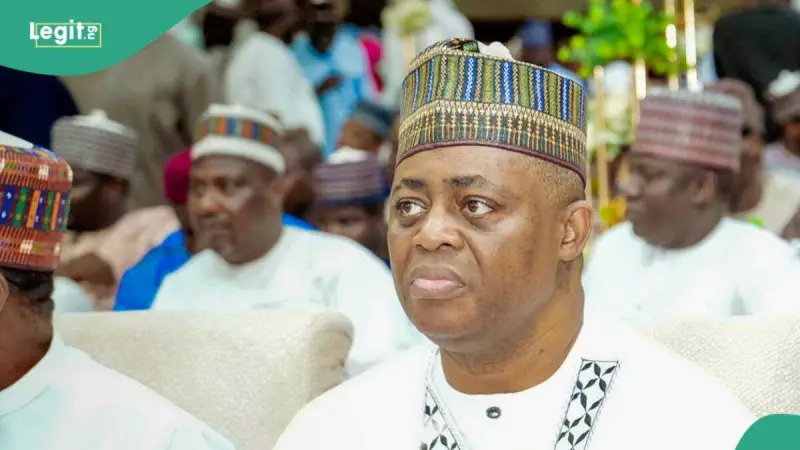
On the 60th anniversary of a pivotal and violent event, a prominent Nigerian politician has shared a deeply personal account of the trauma that marked the nation's descent into military rule. Chief Femi Fani-Kayode's childhood was shattered in the early hours of January 15, 1966, when mutinous soldiers stormed his family home, an event that foreshadowed decades of political instability.
A Child's Terrifying Morning: The Fani-Kayode Home Invasion
In a recent article commemorating the sombre anniversary, Chief Femi Fani-Kayode, a lawyer, former minister, and recently appointed ambassador-designate, recounted the brutal details of that fateful day. He was only six years old when soldiers forcefully entered the official residence of the Deputy Premier of the Western Region, his father, Chief Remilekun Adetokunboh Fani-Kayode.
The young boy watched in horror as the armed men ransacked the house, terrorised his family, and ultimately abducted his father. In a fleeting moment of humanity amidst the chaos, Fani-Kayode recalls one soldier attempting to comfort him, saying, "don't worry, we won't kill your father, stop crying." This personal testimony sheds a stark, human light on the cold political mechanics of Nigeria's first coup d'état.

The Plotters, The Victims, and a Nation Upended
The coup, as detailed by Fani-Kayode and corroborated by historians like Max Siollun, was orchestrated by a group of military officers. Key figures included Major Chukwuemeka Kaduna Nzeogwu, Major Chris Anuforo, Major Tim Onwutuegwu, Major Adewale Ademoyega, and Major Don Okafor. Fani-Kayode emphasised that a vast majority of the plotting officers hailed from one specific ethnic nationality, a fact that would heavily influence the nation's subsequent political narrative.
The mutiny's toll was high and targeted the very apex of Nigeria's First Republic leadership. The list of victims included:
- Prime Minister Sir Abubakar Tafawa Balewa
- Premier of the Northern Region, Sir Ahmadu Bello
- Premier of the Western Region, Chief Samuel Ladoke Akintola
- Federal Minister of Finance, Chief Festus Okotie-Eboh
- Brigadier Zakariya Maimalari
- Brigadier Samuel Ademulegun
Chief Remilekun Fani-Kayode was among those abducted, taken to Lagos, and bound at Dodan Barracks.
Divine Providence and Lasting Scars on Nigeria's Journey
Fani-Kayode's narrative includes a dramatic rescue. He credits loyalist troops, led by Lt. Tokida under Captain Paul Tarfa and on the orders of then Lt. Col. Yakubu Gowon, with saving his father's life following a gun battle. He describes his father's survival amidst flying bullets as an act of divine providence.
Reflecting on the coup's broader impact, Chief Fani-Kayode leaves no room for ambiguity in his condemnation. He labels the event "indefensible, unjustifiable, unacceptable, unnecessary, unprovoked and utterly barbaric." He argues forcefully that this single act of violence set off a catastrophic cycle of retaliation and counter-coups that fundamentally disrupted Nigeria's democratic development and political cohesion.
The coup of January 15, 1966, did not just claim lives; it altered the nation's destiny, embedding a legacy of military intervention in politics. Fani-Kayode concludes his poignant remembrance with a fervent hope that Nigeria will never again witness such a brutal seizure of power, a hope echoed by many who study the nation's turbulent post-independence history.
This personal recollection comes as Chief Femi Fani-Kayode prepares for a new chapter in public service, having been nominated by President Bola Ahmed Tinubu as a non-career ambassador, a nomination for which he has expressed public gratitude.