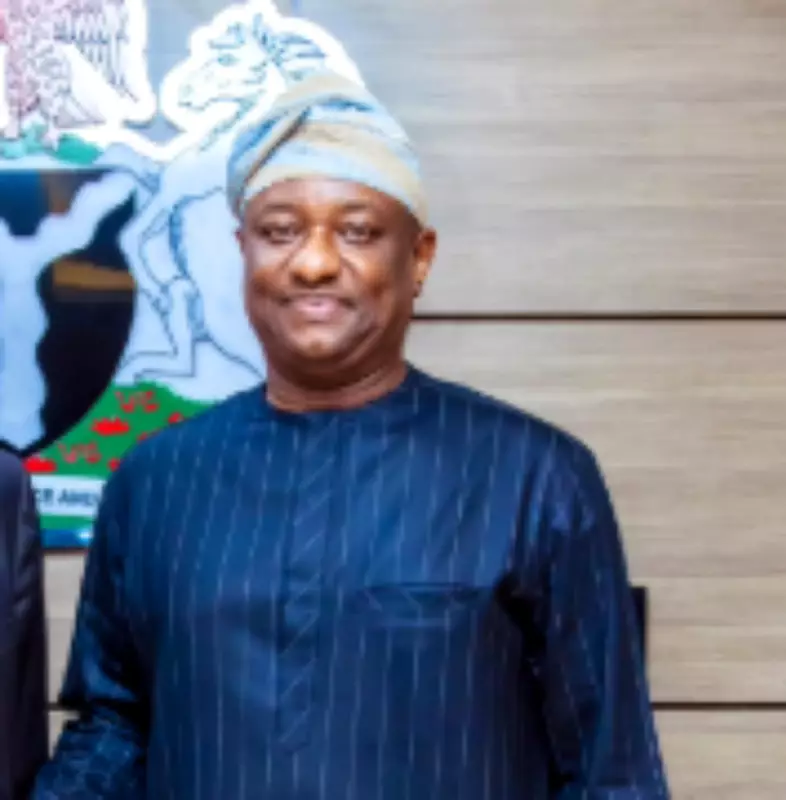
Aviation Minister Festus Keyamo Confronts Critics of New Electoral Legislation
Festus Keyamo, the Minister of Aviation and Aerospace Development, has launched a pointed critique against Nigerian journalists and activists who have voiced opposition to the recently enacted Electoral Act 2026. The minister challenged their claims of representing the broader Nigerian populace, suggesting instead that these dissenting voices are driven by personal biases and undisclosed political interests.
Background of the Electoral Act Controversy
On Wednesday, February 18, President Bola Tinubu formally signed the Electoral Act 2026 (Amendment) into law, marking a significant development in Nigeria's electoral framework. The revised legislation introduces provisions for the electronic transmission of election results, but includes a contentious clause permitting manual tabulation in cases where network failures are detected at polling units.
This specific provision has sparked considerable debate across the political spectrum. Opposition parties, certain lawmakers, and various civil society groups have expressed strong reservations about the manual tabulation allowance. Critics argue that the legislation should have mandated exclusively electronic transmission of results to enhance transparency and reduce potential electoral malpractices.

Opponents of the clause contend that it creates a loophole that could be exploited during elections. They fear that presiding officers might fabricate election results manually while falsely citing network issues as justification for not using electronic transmission methods. This concern has fueled widespread criticism and calls for amendments to strengthen the electoral process.
Keyamo's Social Media Response
In a detailed post shared on the social media platform X this morning, Minister Keyamo directly addressed these criticisms with characteristic bluntness. He expressed amusement at what he described as the tendency of certain journalists and opposition-aligned figures to present their personal viewpoints as representative of the Nigerian people's collective will.
"It is amusing to see how some journalists and core opposition characters, posing as 'activists', continually express their own deep-seated biases as the wishes of 'the Nigerian people'," Keyamo wrote. "How and where did they aggregate the views of 'the Nigerian people'?"
The minister proceeded to question the legitimacy of the opposition's claim to represent public opinion, listing several groups he believes constitute the actual dissenting minority:
- Protesters who gather at the National Assembly entrance primarily for media attention
- The 15 Senators who voted against the majority of 94 Senators during legislative deliberations
- Fewer than 25 House of Representatives members who walked out while over 300 members remained
- Vocal commentators who frequently appear on television programs
- Social media users who dominate online comment sections with their grievances
Keyamo emphasized that these groups represent only a fraction of Nigeria's population and questioned their methodology for claiming to speak for the entire nation.
Warning About Election Season Agendas
The aviation minister concluded his remarks with a cautionary note directed at the Nigerian public as the country approaches another election cycle. He urged citizens to maintain vigilance regarding media narratives and commentator biases.
"Nigerians should be alert as we enter an election season," Keyamo warned. "Some journalists and almost every so-called 'neutral' commentator or activist you see or hear in the media are all working for one interest or the other; they just don't have the guts to come out with their full chest to openly support the political party or candidate for which or whom they are working."
This statement reflects growing concerns about media objectivity and the transparency of political advocacy in Nigeria's increasingly polarized electoral environment. The minister's comments highlight ongoing tensions between government officials and civil society actors regarding electoral reforms and democratic processes.

The debate over the Electoral Act 2026 amendments continues to unfold, with implications for Nigeria's electoral integrity, media freedom, and political discourse as the nation prepares for future elections under the revised legal framework.