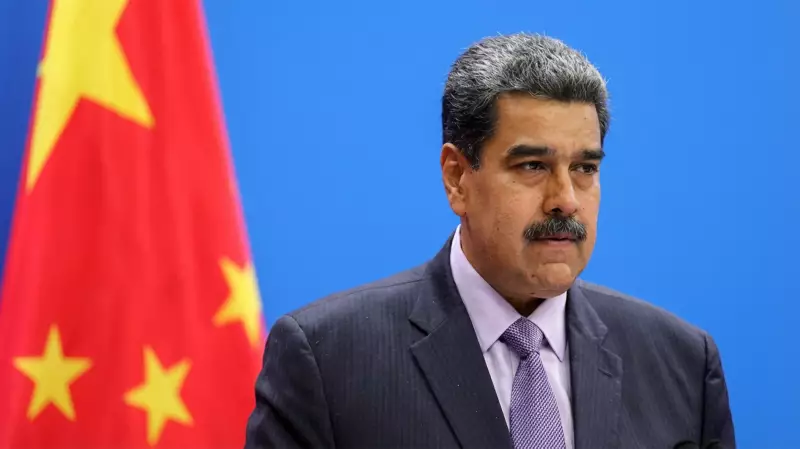
In a dramatic turn of events, Venezuelan President Nicolas Maduro has been seized by United States special forces, marking a stunning end to his more than decade-long, iron-fisted rule. The 63-year-old former bus driver, who rose from humble origins to become one of Latin America's most controversial leaders, was captured in an early-morning assault on Caracas alongside his wife, Cilia Flores.
The Rise and Reign of a Controversial Leader
Nicolas Maduro first came to power in 2013, chosen as the successor by the charismatic socialist firebrand, Hugo Chavez, just three months before Chavez's death from cancer. His path to the presidency was not smooth; he barely scraped through his first election in 2013 and faced skepticism within his own United Socialist Party of Venezuela (PSUV) due to his lack of Chavez's rhetorical flair.
Despite the challenges, Maduro clung to power, claiming re-election twice in votes widely condemned as fraudulent: in 2018 and again in July 2024. In January 2025, he was sworn in for a third term, which would have seen him rule for 18 years—surpassing the 14-year tenure of his mentor, Chavez.

His rule, however, was defined by severe economic hardship and political repression. Venezuela's economy collapsed under his watch, experiencing four consecutive years of hyperinflation and an astonishing 80 percent drop in its Gross Domestic Product over a decade. This catastrophic situation forced an estimated seven million Venezuelans to flee the country.
A Rule Marked by Crackdowns and International Isolation
Maduro maintained his grip on power by increasingly relying on the military, security forces, and a handful of international allies, namely China, Cuba, and Russia. His government faced relentless accusations of human rights abuses, including arbitrary detentions, rigged trials, torture, and media censorship.
Political crackdowns were a recurring feature of his presidency. More than 2,400 people were arrested, 28 killed, and about 200 injured in the suppression of protests that followed his disputed 2024 election victory claim. This violence echoed previous deadly crackdowns on opposition movements in 2014, 2017, and 2019.
Internationally, Maduro weathered significant pressure. For months, he was in the crosshairs of former US President Donald Trump, who accused him of drug trafficking. In 2018, much of the world recognized opposition figure Juan Guaido as Venezuela's interim president, though that parallel government eventually imploded. Following the July 2024 elections, the US, European nations, and several Latin American neighbors declared opposition candidate Edmundo Gonzalez Urrutia the country's rightful leader.
The Personal and the Political: Maduro's Public Persona
Publicly, Maduro cultivated an image of a man of the people. A professed Marxist and Christian, he was an avowed baseball fan and lover of salsa, often showing off his dance moves on state television with his wife, Cilia Flores, by his side. He referred to Flores, a former prosecutor and lawmaker seven years his senior, as "First Combatant" and "Cilita." She held significant power behind the scenes, having previously served as president of the National Assembly.
In a unique propaganda effort, Maduro's image was even transformed into a cartoon superhero named "Super-Bigote" (Super-Mustache), a caped crusader "at war with imperialism." To deflect blame for Venezuela's crises, he consistently promoted anti-American conspiracy theories, accusing the US of plotting to overthrow him, even as his government came under investigation for rights violations by the International Criminal Court.
Maduro and his wife are now reportedly being taken to New York to face federal charges, closing a chapter on a tumultuous era for Venezuela that leaves the nation's future deeply uncertain.