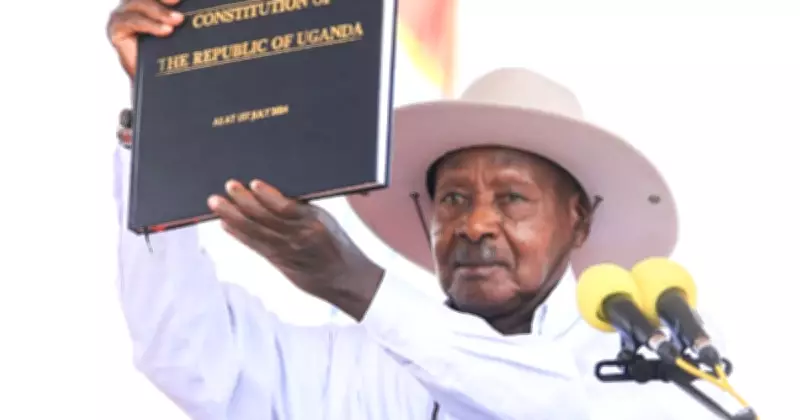
Ugandan President Yoweri Museveni was sworn in for a seventh consecutive term on Tuesday, extending a rule that began in 1986 to at least 2031 and cementing his place among Africa's longest-serving leaders.
Inauguration Ceremony
The inauguration took place at the Kololo Independence Grounds in Kampala amid tight security and heavy deployment of armoured vehicles across the city. The ceremony, held under the theme 'Protecting the Gains, Making a Qualitative Leap to Higher Middle Income Status,' ran from 8 am to 2 pm local time and was declared a public holiday across Uganda.
At least 35 heads of state and regional leaders attended, including Kenya's Deputy President Kithure Kindiki and former President Uhuru Kenyatta.

Election Results and Dispute
Museveni secured 71.65 per cent of the vote in the January 2026 elections, defeating Bobi Wine, whose real name is Robert Kyagulanyi Ssentamu, who garnered 24 per cent. Wine rejected the outcome, alleging widespread ballot stuffing and electoral malpractice. Electoral officials denied the accusations and maintained the poll was credible. Wine subsequently fled Uganda, claiming he feared for his safety and accusing the government of targeting opposition figures.
The 2026 result marks the first time in nearly three decades that Museveni has surpassed the 70 per cent mark, a level last achieved in 1996. Since assuming office in 1986, he has overseen constitutional amendments removing presidential age and term limits, allowing him to extend his rule indefinitely.
Support and Criticism
Supporters credit his administration with maintaining stability and rebuilding infrastructure, while critics argue the extended tenure has limited democratic competition and institutional accountability.
Future Plans and Succession
In his victory remarks, Museveni pledged to focus on economic growth, expansion of the Parish Development Model, youth skilling programmes, and strengthening regional security in the Great Lakes region. Uganda is also gearing up to become an oil producer, a development that will define much of the economic agenda of his new term.
Attention has increasingly turned to his son, Muhoozi Kainerugaba, who serves as military chief and is widely seen as a possible successor. Kainerugaba has faced criticism over controversial social media posts directed at opposition politicians, and analysts say his growing public profile points to a succession conversation the government has yet to acknowledge openly.
Museveni, now 81, has not indicated any plans to step down. Analysts believe this term could be his last, though that has been said before.