National Assembly's 93-Day Recess in 2026 Highlights Governance Challenges
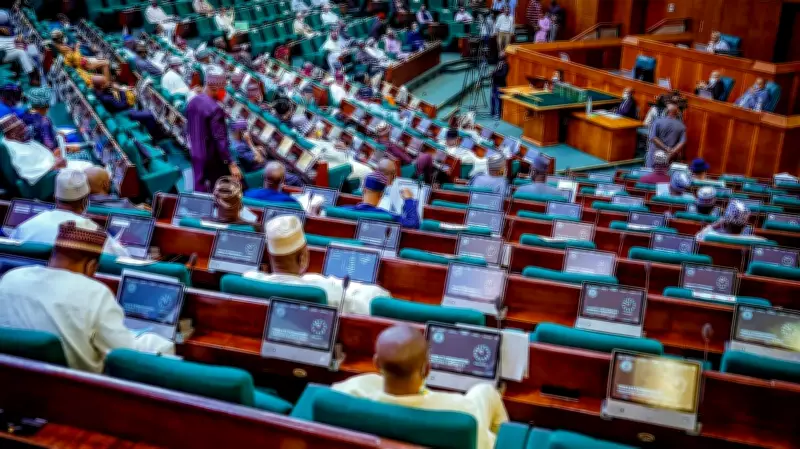
As the National Assembly resumes plenary today after its Easter break, lawmakers return following a series of adjournments that limited sittings to just 17 days in the first quarter of 2026. This resumption occurs barely 48 hours before political parties begin primaries on April 23, raising concerns about a direct clash between legislative duties and full-scale electioneering ahead of the 2027 general elections.
Data Reveals Alarming Recess Patterns
Data from the Policy and Legal Advocacy Centre (PLAC) shows that since its inauguration on June 13, 2023, the 10th National Assembly has spent 581 of 1,003 days on recess, with lawmakers sitting in plenary for only 422 days. PLAC is an independent, non-profit, non-partisan civil society organization focused on strengthening democratic governance in Nigeria.
Further observation indicates that the lead-up to the April 21 resumption reflects a pattern of disrupted sittings. Members initially returned from the Christmas and New Year break on January 27, 2026, but plenary was quickly adjourned for two weeks to allow committees to engage ministries, departments, and agencies (MDAs) in budget defence sessions. This move was intended to fast-track consideration of the 2026 Appropriation Bill, but legislative work remained unsettled.

The Assembly briefly reconvened in February for the urgent passage of the Electoral Act 2026, after which plenary was adjourned again until February 24. That date was later shifted to March 5 and then to March 10 as committees worked to conclude budget defence processes. By the time lawmakers fully reconvened, the legislative calendar had already been significantly compressed.
Constitutional Threshold at Risk
Under Section 63 of the 1999 Constitution, the legislature is required to sit for not fewer than 181 days in a year. With only 17 sitting days recorded between January and March 31, the National Assembly was away for 77.1% of the period, falling well short of this benchmark. PLAC data further reveals that 2025 was the least productive year, with only 141 sitting days, 40 days short of the constitutional minimum.
To meet the 181-day threshold in 2026, lawmakers would need to sit for at least 164 additional days before December. Observers say this target appears difficult as the political calendar tightens, compounded by the Independent National Electoral Commission (INEC) timetable placing lawmakers at the center of electoral processes.
Political Activities Intensify Legislative Absenteeism
According to INEC, party primaries are scheduled from April 23 to May 30, 2026, with many lawmakers expected to seek re-election tickets. Campaigns for presidential and National Assembly elections begin on August 19, 2026, while governorship and state assembly campaigns start on September 9, 2026. Analysts warn this overlap leaves a narrow and uncertain window for legislative work.
Early signs of political movements are already visible, with legislative activities slowing significantly. Fewer lawmakers are present for plenary and committee engagements, and many committees are reportedly inactive as members focus on political mobilization in their constituencies.
Impact on Governance and Public Accountability
Irregular sittings are affecting governance, with the 2026 budget passed well into the fiscal year and constitutional amendment processes unresolved. The constitutional review exercise, which commenced in 2024, appears constrained by recess cycles and an uncertain plenary calendar, missing the December 2025 deadline for key proposals like special seats for women and state policing.
Auwal Musa Rafsanjani, Executive Director of the Civil Society Legislative Advocacy Centre (CISLAC), criticized the persistent breach of constitutional provisions, noting that recess periods often function like holidays with limited impact on pending legislative work. He argued this undermines public accountability and weakens effective governance.

Ibrahim Zikirullahi, Executive Director of the Resource Centre for Human Rights and Civic Education (CHRICED), described the pattern as a "disturbing pattern of legislative absenteeism" and a betrayal of the social contract. He warned that a legislature largely absent cannot provide oversight or pass urgent reforms, exacerbating public frustration amid economic hardship and insecurity.
Lawmakers Defend Recesses and Election Participation
In response, Philip Agbese, Deputy Spokesperson of the House of Representatives, stated that the leadership is working to change the narrative around parliamentary productivity. He emphasized that recess is a standard global parliamentary practice, with committee work continuing even when plenary is suspended.
Agbese dismissed concerns that election-related activities would undermine legislative work, describing political participation as part of democratic governance. He argued that parliamentarians participating in electoral processes deepen governance and ensure the country continues through the democratic process, with members returning to deliver on campaign promises.