Ilhan Omar Launches Fierce Attack on Trump Over Epstein Files and Somalia Remarks
In a dramatic escalation of political hostilities, US Representative Ilhan Omar has unleashed a blistering critique of President Donald Trump, directly referencing his name in connection with the Jeffrey Epstein scandal. The Minnesota congresswoman's fiery response came after Trump made controversial statements about Somali immigrants and questioned her legitimacy as an elected official.
Trump's Provocative Comments Spark Immediate Backlash
During a Tuesday night appearance on Fox Business, President Trump made inflammatory remarks that quickly ignited controversy. He asserted that Somali immigrants were having a detrimental impact on Minnesota and referred to Congresswoman Omar as a "fake congresswoman." The president offered no further explanation or evidence to support these claims, leaving many observers puzzled by the nature of his accusations.
Trump's comments specifically targeted Omar, who was born in Somalia and immigrated to the United States as a twelve-year-old child. She has represented Minnesota's 5th congressional district since 2019, making her one of the first two Muslim women ever elected to Congress and the first Somali-American member of the legislative body.

Omar's Explosive Social Media Response
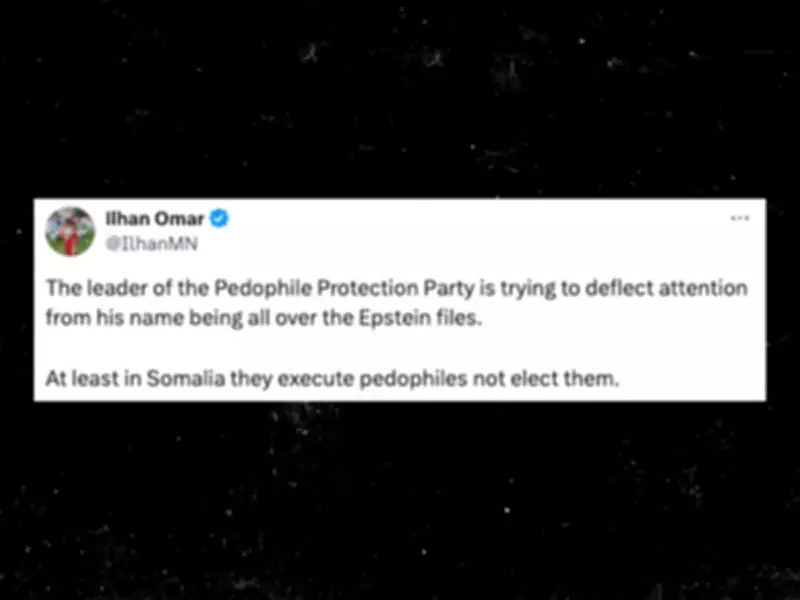
Congresswoman Omar wasted no time in responding to what she perceived as personal and ethnic attacks from the president. Taking to the social media platform X, she addressed her substantial following of more than 2.7 million users with a message that immediately captured national attention.
"The leader of the Pedophile Protection Party is trying to deflect attention from his name being all over the Epstein files. At least in Somalia they execute pedophiles not elect them," Omar wrote in her post.
This pointed statement represents one of the most direct public connections made between Trump and the ongoing Epstein scandal. Jeffrey Epstein, the convicted sex offender who died in prison while awaiting trial on federal sex trafficking charges, had numerous high-profile associates whose connections to him have been subject to intense public scrutiny.
The Epstein Connection and Political Implications
Omar's reference to the "Epstein files" highlights the continuing controversy surrounding documents related to the financier's activities and associates. President Trump's name has appeared multiple times in various materials connected to Epstein, though the president has consistently maintained his innocence and stated that he severed ties with Epstein many years ago.
The White House has not issued any public response to Omar's latest allegations, leaving the political atmosphere charged with anticipation about how the administration might address these serious accusations. This silence contrasts sharply with the typically rapid response team that usually addresses criticisms of the president.
History of Political Confrontation
This exchange represents merely the latest chapter in what has become a recurring pattern of public clashes between the Minnesota congresswoman and the president. The two political figures have frequently engaged in heated exchanges across multiple policy areas, creating a dynamic of persistent tension that shows no signs of abating.
Their disagreements have spanned numerous critical issues including:
- Immigration policy and border security approaches
- Foreign relations and international diplomacy
- Domestic political strategy and legislative priorities
- Cultural representation and identity politics
Each confrontation between Omar and Trump has drawn significant media attention, reflecting broader divisions within American politics and society. Their exchanges often serve as proxies for larger debates about immigration, national identity, and the boundaries of political discourse.

Broader Context and Political Ramifications
The timing of this latest confrontation comes during a period of heightened political tension in the United States, with elections approaching and multiple policy debates reaching critical junctures. Omar's decision to invoke the Epstein scandal represents a significant escalation in rhetoric, moving beyond policy disagreements to directly question moral character and personal associations.
This development also highlights the increasingly personal nature of political conflicts in contemporary American politics, where policy disagreements frequently transform into character attacks and moral accusations. The reference to Somalia's legal system adds an additional layer of complexity, drawing comparisons between different societies' approaches to justice and punishment.
As both figures maintain substantial public platforms and loyal followings, their continued clashes promise to keep this political rivalry in the national spotlight for the foreseeable future, with potential implications for electoral politics, legislative cooperation, and the overall tone of political discourse in the United States.