Senate Demands Rescue of 416 Captives Amid Intensifying Security Debate
Growing insecurity across multiple regions of Nigeria has ignited a fierce debate over the effectiveness of current security strategies, with political leaders, security officials, and stakeholders presenting sharply contrasting views on the situation and necessary solutions. While some government representatives highlight gains from ongoing military operations and assert that conditions are improving, critics argue that persistent attacks, rising casualties, and repeated breaches in vulnerable communities reveal deep structural weaknesses in intelligence, coordination, and response mechanisms.
Senate Orders Investigation and Rescue Mission
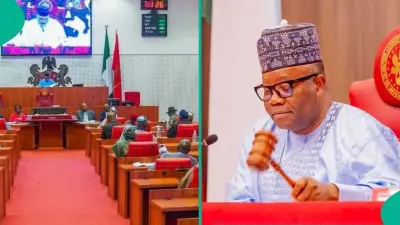
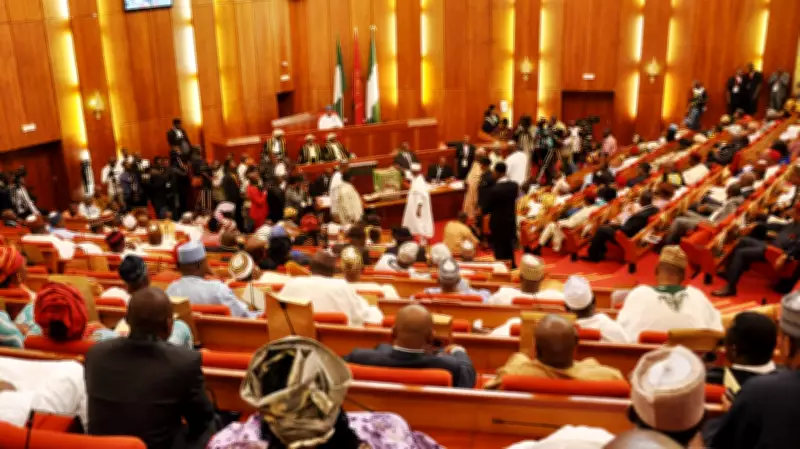
Tensions flared at the National Assembly as the Senate demanded the immediate rescue of 416 citizens reportedly held captive by Boko Haram insurgents. Lawmakers also ordered a thorough investigation into recent attacks on military formations in Borno State, warning that renewed violence in the North-East signals a dangerous resurgence of insurgency that could reverse years of military progress. The chamber observed a minute of silence for 17 officers, including Brigadier-General Oseni Braimoh, who were killed during a March 3 assault on military bases in Monguno and Benisheikh.
Senate Chief Whip Mohammed Monguno emphasized that the coordinated assaults represent a deliberate attempt to weaken military operations and disrupt critical routes, such as the Damaturu–Maiduguri corridor. "This is not random. It is deliberate and strategic," Monguno stated. Senator Ali Ndume revealed that insurgents issued a 72-hour ultimatum demanding a N5 billion ransom for the abducted victims, heightening concerns among lawmakers.

Calls for Suspension of Political Activities
Senator Abdul Ningi urged the suspension of political activities in eight states severely affected by insecurity, arguing that the worsening situation demands extraordinary measures. "We must take extraordinary measures. This is no longer business as usual," Ningi declared. He specifically called for halting political activities in Borno, Plateau, Bauchi, Benue, Niger, Sokoto, Kebbi, and parts of Kano State until security is sufficiently assured.
"We cannot continue to think because we are in Abuja and therefore, this does not affect us. It has affected us," Ningi emphasized. Other senators, including Diket Plang, warned that persistent attacks threaten national security, food systems, and resettlement efforts. The Senate directed the Armed Forces to review operational strategies, audit equipment, and strengthen intelligence capabilities, while also urging the National Emergency Management Agency and the North East Development Commission to scale up humanitarian support.
Criticism of Security Strategy in Benue
Amid renewed killings in Benue State, Senator Abba warned that Nigeria's security strategy remains trapped in a "predictable cycle of failure," characterized by recurring attacks on rural communities and short-term responses that fail to ensure lasting protection. Reacting to violence in Benue South Senatorial District, the lawmaker noted that attacks persist despite ongoing military operations, reflecting deeper weaknesses in intelligence coordination, operational planning, and political resolve.
Abba cited an April 12 attack in Edikwu Ankpali, Apa Local Government Area, where at least nine people were killed, highlighting that the community experienced similar violence a year earlier. He questioned why high-risk areas continue to face assaults despite the presence of security formations like Operation Whirl Stroke. "If security forces are already deployed there, why are attacks still happening?" he asked, criticizing a reactive security model driven by post-attack interventions.
Gani Adams Faults CCTV Plan and Power Supply
The Aare Onakakanfo of Yorubaland and national leader of the Odua People’s Congress, Gani Adams, criticized President Bola Tinubu's plan to install CCTV cameras only in Jos, advocating instead for a nationwide rollout. Speaking at the yearly Oke-Ibadan Festival, Adams argued that effective surveillance requires stable electricity, noting Nigeria's inadequate power generation compared to South Africa's 58,000 megawatts and Egypt's over 60,000 megawatts.

"Without adequate and regular power supply, there is no life. It is funny how Nigeria can be talking about 5000 megawatts at this stage of our development as a nation," Adams stated. He urged the Federal Government to decentralize electricity generation, proposing a one- to two-year timeline for states to develop their own power systems to support economic growth and security.
PRP Raises Alarm Over Insecurity and Funding
The National Chairman of the Peoples Redemption Party (PRP), Hakeem Baba-Ahmed, criticized the Federal Government for rising insecurity, stating that the party has identified clear strategies to address root causes of violence. Baba-Ahmed, a former adviser to Vice-President Kashim Shettima, accused the administration of failing to prioritize security despite increasing casualties, alleging that only 7% of the budget for defense procurement was released last year.
"We were shocked to hear that last year, this same administration, under which more Nigerians have died than under any other administration, released only 7 per cent of the money budgeted for defense procurement and military equipment," Baba-Ahmed said. He vowed that a PRP government would tackle insecurity decisively across all regions, ensuring every Nigerian can sleep peacefully.
Government Claims Security Improvements
In contrast, the Secretary to the Government of the Federation, George Akume, asserted that Nigeria's security situation is improving, with Boko Haram significantly weakened by sustained military operations. Akume, speaking in Abuja, highlighted gains from kinetic and non-kinetic strategies, stating that attacks have been reduced to isolated incidents. "The challenges we face are temporary. There are clear signs of improvement, and we are confident the situation will continue to stabilise," he said.
Recent Attacks and Military Offensives
Despite Akume's claims, suspected Boko Haram members killed 20 residents in coordinated attacks on Pubagu community in Borno State and Mayo-Ladde in Adamawa State. The attacks occurred around 4:00 p.m. on Tuesday, with insurgents overpowering local security operatives and opening fire on residents. Mada Saidu, Chairman of Askira/Uba Local Government Area, confirmed 11 deaths in Borno and 9 in Adamawa.
Meanwhile, troops of Operation Hadin Kai killed 30 Islamic State West Africa Province (ISWAP) fighters during coordinated land and air operations on Kaniram Island in Lake Chad, Borno State. The offensive, conducted between April 21 and April 22, 2026, also destroyed several terrorist speed boats, disrupting logistics and movement within the region. Media Information Officer Sani Uba noted that air strikes played a critical role in dismantling ISWAP networks, with further operations in Sambisa Forest destroying three gun trucks and killing additional fighters.