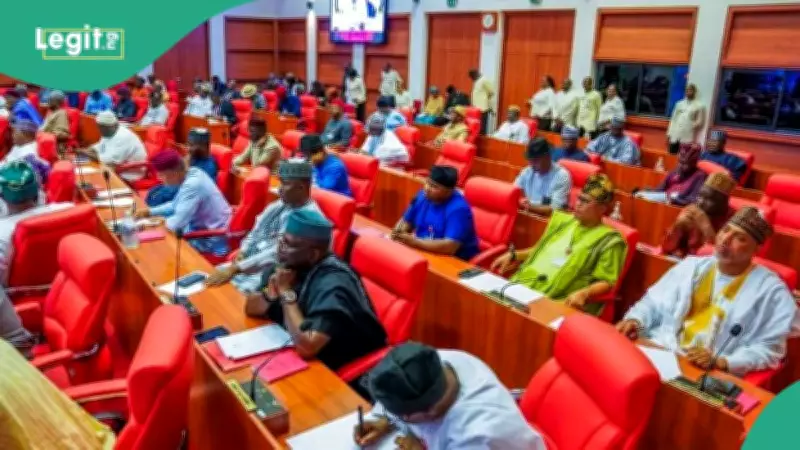
Senate Establishes 12-Member Committee to Address Electoral Amendment Act Controversy
The Nigerian Senate has taken decisive action in response to the ongoing controversy surrounding the Electoral Amendment Act by appointing a 12-member joint committee to work with the House of Representatives. This move comes after a particularly heated and rowdy plenary session that highlighted deep divisions within the legislative chamber over critical electoral reforms.
Urgent Committee Formation Amid Legislative Tensions
Senate President Godswill Akpabio announced the committee members during an emergency plenary session held on Tuesday, emphasizing the urgency of the matter. Akpabio stressed that if the committee can conclude its work within the next few days or one week, President Bola Tinubu could potentially sign the amended bill into law before the end of February. The committee will be chaired by Senator Simon Lalong, with other notable members including Senator Orji Uzor Kalu, Senator Tahir Mungono, Senator Adamu Aliero, and Senator Abba Moro.
The expanded committee represents an increase from the originally proposed nine members to twelve, reflecting the complexity and sensitivity of the electoral amendment process. Akpabio explained that this decision was made after consultation with Senate leadership, indicating the importance of having broad representation to address the contentious issues effectively.

Clause 60(3) Sparks Heated Chamber Debate
The plenary session turned chaotic when Senator Tahir Monguno, the Senate Chief Whip representing Borno North, raised a point of order seeking to rescind the chamber's earlier approval of Clause 60(3) of the Electoral Amendment Bill. His motion was based on Orders 1(b) and 52(6) of the Senate Standing Orders, 2023 (as amended), and received support from Senator Abdul Ningi of Bauchi Central.
Tension escalated dramatically when Monguno presented his motion and read Clause 60(3) without including the phrase "real-time" and replacing "transmission" with "transfer." This modification sparked immediate protests from several senators, with Senator Enyinnaya Abaribe of Abia South objecting strongly and repeatedly raising points of order as the chamber descended into shouting matches.
The Core of the Controversy: Real-Time Transmission
According to page 45 of the report from the Senate Committee on Electoral Matters, Clause 60(3) of the bill originally stated: "The Presiding Officer shall electronically transmit the results from each polling unit to IREV portal in real time and such transmission shall be done after the prescribed Form EC8A has been signed and stamped by the Presiding Officer and/or countersigned by the candidates or polling agents available at the polling unit."
The debate over whether "real-time transmission" should remain a mandatory requirement in Nigeria's electoral process has exposed significant divisions within the Senate. Some legislators argue for maintaining strong electronic transmission provisions to enhance electoral transparency, while others express concerns about practical implementation challenges across the country's diverse geographical and technological landscape.
Historical Context and Legislative Process
This emergency sitting was convened specifically to adopt the Votes and Proceedings of the February 4 plenary session, during which the Electoral Bill was initially passed. The current controversy follows the Senate's earlier decision to remove provisions that would have made real-time electronic transmission of election results from polling units mandatory in the ongoing amendment of the Electoral Act.
The formation of this 12-member committee represents a critical step forward in Nigeria's ongoing electoral reform process. As the committee begins its work, all eyes will be on how they navigate the complex technical, political, and logistical considerations surrounding electronic transmission of election results—a issue that has become central to debates about electoral integrity in Nigeria's democratic system.