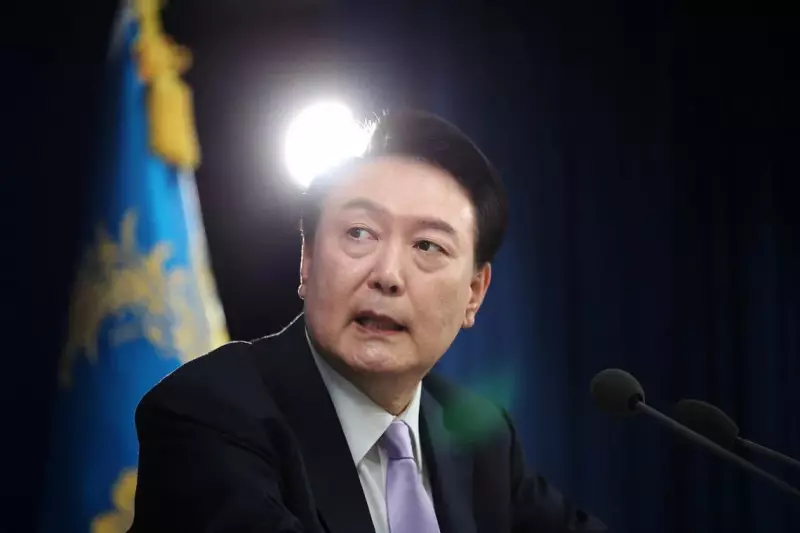
A South Korean court has delivered a historic verdict, sentencing former President Yoon Suk Yeol to five years behind bars. The ruling on Friday, January 16, 2026, stems from his dramatic and failed attempt to impose martial law in December 2024.
Court Finds Guilt on Multiple Charges
The Seoul Central District Court found the former leader guilty of serious charges. Yoon was convicted of obstructing law enforcement by using his presidential security service to block officials from executing a lawful arrest warrant against him.
Furthermore, the court ruled that he fabricated official documents. Crucially, he failed to follow the legal process for declaring martial law, which requires deliberation at a formal cabinet meeting.

A Brief Declaration with Lasting Shockwaves
Although the martial law declaration lasted only about six hours, it sent shockwaves through the nation's political system. This judgment is the first in a series of criminal cases related to the event.
The lead judge stated that Yoon abused his presidential authority. He used state security officials to block lawful warrants, effectively turning public servants loyal to the Republic of Korea into a personal shield for his own benefit.
Immediate Appeal and Broader Legal Battle
Yoon, now 65, showed no visible reaction as the sentence was read in a courtroom packed with supporters. His legal team immediately announced plans to appeal, calling the ruling politicized.
Prosecutors have a separate ongoing case where they are seeking the death penalty. They accuse Yoon of masterminding an insurrection by attempting to impose illegal military rule and suspend parliament.
Yoon, currently held at the Seoul Detention Center, has defended his actions. He argued that declaring martial law was within his constitutional powers, intended to highlight opposition parties' obstruction of governance.
Political Fallout and Historical Context
Outside the courthouse, a small group of supporters gathered under heavy police security. They held placards claiming Yoon was a victim of a political witch hunt and insisting he remains the legitimate president.
Yoon could have faced up to 10 years for the obstruction charges alone. His eventual arrest required a second operation involving over 3,000 police officers, making him the first sitting president in South Korean history to be taken into custody.
Following the martial law declaration, parliament swiftly voted to overturn it, with support from some members of Yoon's own party. He was later impeached and formally removed from office by the Constitutional Court for violating his constitutional duties.
Though brief, Yoon's attempt to impose martial law severely shook confidence in South Korea's democracy. He now joins a long list of former South Korean leaders convicted and imprisoned, underscoring the country's strict principle of holding even its highest officials accountable under the law.