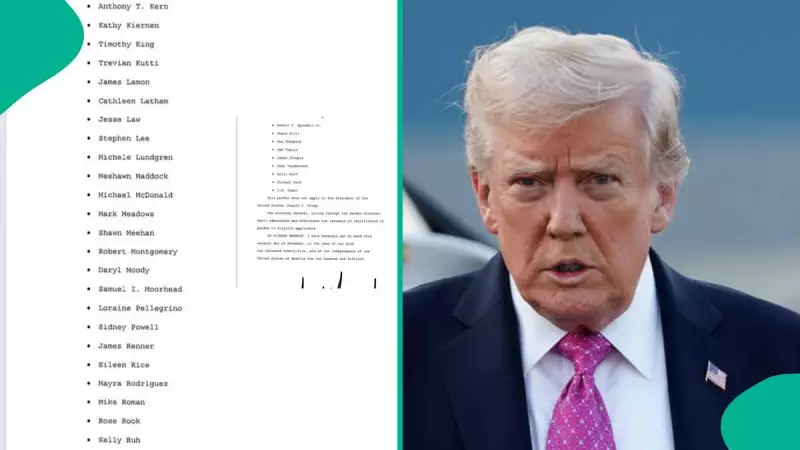
In a significant political move, President Donald Trump has issued comprehensive pardons to numerous allies connected to efforts challenging the 2020 presidential election results. The Justice Department's Pardon Attorney, Ed Martin, publicly shared the proclamation through social media platform X late Sunday.
Key Figures Receiving Presidential Clemency
The presidential proclamation dated November 7 included several high-profile names central to the election controversy. Among those granted full, complete, and unconditional pardons were Trump's personal attorneys Rudy Giuliani and Sidney Powell, along with former White House Chief of Staff Mark Meadows.
These individuals were part of a larger group named in the official document that appeared to carry the president's signature. The proclamation stated it aimed to end what it described as "a grave national injustice perpetrated upon the American people following the 2020 Presidential Election" and to continue "the process of national reconciliation."

Legal Limitations of Federal Pardons
Legal experts immediately noted the limitations of presidential pardons, emphasizing they only apply to federal offenses and provide no protection against state or local charges. This means individuals facing legal action in state courts, particularly in Georgia where several Trump allies face election-related charges, remain vulnerable to prosecution.
Notably, the document explicitly stated that the pardon does not extend to President Trump himself, leaving the former president subject to ongoing legal proceedings at both federal and state levels.
Additional Clemency Actions
In separate clemency actions last week, President Trump also granted pardons to a retired New York City police officer convicted in 2023 for stalking a New Jersey family on behalf of the Chinese government. The case had drawn significant attention due to its international implications.
Trump further extended clemency to former Major League Baseball star Darryl Strawberry, who had been convicted of tax evasion in 1995. These additional pardons have contributed to ongoing debates about the use and scope of presidential clemency powers.
The recent pardons have sparked renewed discussion among legal experts and political analysts about the appropriate use of presidential pardon authority and its impact on political and legal outcomes in the United States.