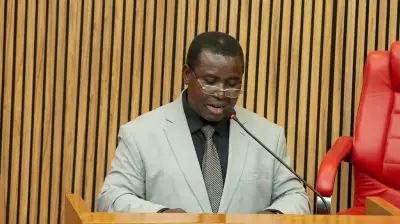
The dawn of 2026 brings more than just a calendar change for Nigeria; it carries a direct and powerful charge. Unlike years that arrive with quiet promises, 2026 poses a fundamental question to every citizen: What are you spreading? This inquiry, posed by writer and scholar Ebuka Ukoh, moves beyond mere reflection to become a mandate for personal and national transformation.
The Unseen Force That Shapes Nations
Ukoh, an alumnus of the American University of Nigeria, Yola, and a PhD student at Columbia University, argues that a nation's destiny is not forged by policies alone. The real change occurs through what multiplies silently in everyday spaces: our homes, classrooms, offices, and streets. Ideas, attitudes, and behaviours have a viral quality. Courage spreads. So does fear. Excellence can multiply, but neglect can too. The fabric of society is woven from these countless, repeated individual threads.
He draws on timeless wisdom, referencing the biblical book of Genesis and the parable of the leavened bread, not to promote religion but to highlight a universal pattern. A small element introduced into a system can reshape the whole through influence, not volume. This principle is a social law: what enters a system, or a person, will reproduce itself. If resentment is allowed in, it spreads. If discipline is embraced, it multiplies.

Nigeria's Battle with Multiplying Challenges
The urgency of this message is rooted in Nigeria's recent struggles. Over the past year, citizens have endured a harsh reality where prices outpace wages, insecurity deepens in communities, and public trust in institutions continues to erode. Ukoh contends these crises did not appear overnight. They are the harvest of tolerated habits, widespread neglect, and complicit silence.
"No nation collapses suddenly," he writes. "It drifts when the wrong things multiply quietly." Corruption spreads because it is tolerated. Insecurity grows because neglect was permitted first. Hopelessness takes root when personal and collective responsibility withdraws. However, the same law of multiplication that amplifies harm can also accelerate healing.
Your Platform is Your Daily Conduct
The call to action for 2026 is clear and democratized. Spreading positive change does not require a massive social media following or political office. It requires alignment and consistency in one's immediate sphere of influence.
- A teacher spreads order and curiosity in a classroom.
- A market trader spreads fairness at his stall.
- A civil servant spreads accountability at her desk.
- A parent spreads values at the dinner table.
These are not small acts. They are seeds of cultural change. A single teacher insisting on punctuality in a rural school can reshape a generation's sense of order. A shop owner who refuses to cheat can reset the standard of trust on an entire street. Influence follows integrity, not the other way around.
Ukoh urges Nigerians to deliberately choose what they will multiply in this new year: discipline over excuses, learning over shortcuts, responsibility over complaint, and actionable hope over empty slogans. While one may not control the nation's direction, everyone controls what enters their own life and conduct. And what enters will inevitably spread.
The future of Nigeria will be decided not solely by budgets and elections, but by what spreads in everyday interactions. 2026 is presented as the year of conscious spreading. The final charge is to spread what makes life stronger, people better, and tomorrow safer than today. What you release into your space will not stop with you, and this year, that choice matters more than ever.