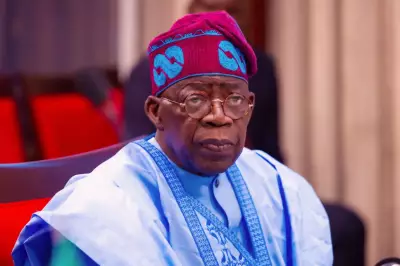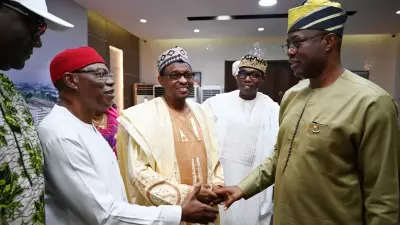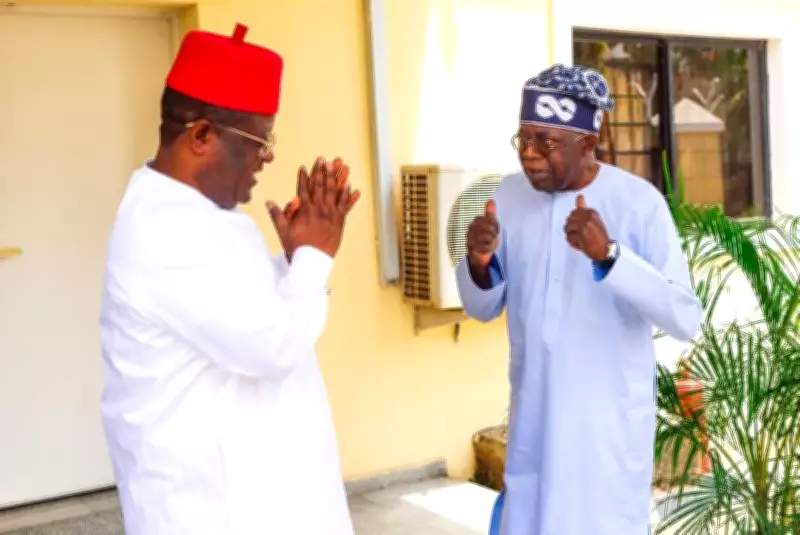
President Bola Tinubu's administration has borrowed an estimated N57 trillion to N65.9 trillion since taking office in May 2023, according to economic analysts and data tracking organizations such as the Alliance for Economic Research and Ethics. The Minister of Works, David Umahi, has defended the borrowing, stating that it is necessary to fix Nigeria's roads because infrastructure is the foundation for security, commerce, and economic growth.
Umahi made the remarks in Abuja during a visit by the Inspector General of Police, IGP Olatunji Disu, to the Ministry of Works. He said, "When people say, 'Why is he borrowing?' The president is borrowing so that our roads can be good. Infrastructure, roads, everything. Without roads, it's difficult for the security agencies. Without roads, it's difficult for commerce to thrive. Without roads, schools will be hindered."
Inherited Projects and New Initiatives
The minister explained that more than 80 per cent of the ongoing projects, valued at about N34 trillion, were inherited from previous administrations, some dating back to 2000, 2015, and 2017. He said President Tinubu decided to retain them because they were critical to the country's economic revolution. Umahi noted that the administration has adopted reinforced concrete pavement to ensure durability, with completed roads expected to last between 50 and 100 years without requiring major attention.

Four Legacy Projects
Umahi highlighted four legacy projects of the Tinubu administration, which he described as investment-driven initiatives designed to trigger economic transformation. These include:
- The Lagos-Calabar Coastal Highway
- The Sokoto-Badagry Highway
- The Calabar-Ebonyi-Benue-Kogi-Nasarawa-Abuja corridor
- The Akwanga-Jos-Bauchi-Gombe-Biu-Maiduguri route
Citing progress, Umahi said the 47.47-kilometer section one of the Lagos-Calabar Coastal Highway has been completed and is attracting investors interested in tolling and recouping funds for the government. He added that the president had approved solar lighting for the entire 375-kilometer Abuja-Kaduna-Zaria-Kano road, with the first 118 kilometers already completed at a cost of N252 billion. The second section of 164 kilometers is expected to be finished by November.
Security Challenges and Cooperation
On security, Umahi said road projects have been delayed in some areas due to insecurity, but the intervention of security agencies has kept work moving. He thanked the police and other security chiefs for their support. The minister emphasized that without adequate roads, security operations, commerce, and education would be hindered, making infrastructure investment a top priority for the administration.