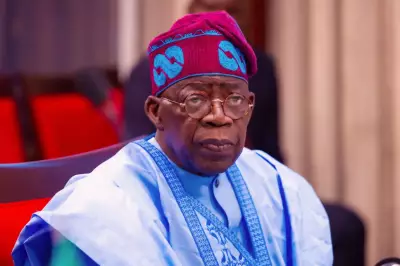
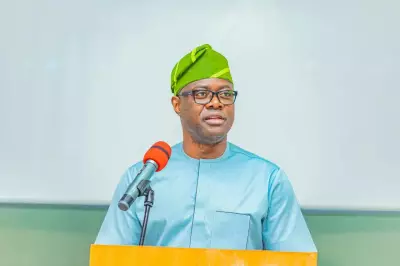
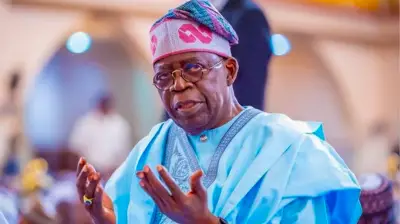
The political landscape of Rivers State is once again a battlefield. As the race towards the 2027 general elections gains momentum, a fierce and deeply personal struggle for supremacy has erupted between former governor Nyesom Wike and his political protégé, the incumbent Governor Siminalayi Fubara. This contest transcends party platforms, centering on raw power: control of political structures, dominance over grassroots networks, and the ultimate question of who holds the authority in Nigeria's economically vital, oil-rich state.
A Strategic Homecoming and a Direct Challenge
Fresh tensions exploded into public view following a series of strategic "homecoming" visits by Nyesom Wike to Rivers State between late December 2025 and early January 2026. Political observers widely interpreted these tours as a deliberate re-entry, designed to reassert dominance, consolidate grassroots loyalty, and directly challenge Governor Fubara's authority. Wike crisscrossed local government areas, including Obio/Akpor, Emohua, Ikwerre, Port Harcourt City, and the Ogoni axis, leaving no doubt about his intentions.
During these gatherings, Wike declared that his political camp would "correct the mistakes of 2023." He pointedly stated that merely chanting President Bola Tinubu's slogan, "On your mandate we stand," would not guarantee electoral tickets or patronage. His repeated mantra that "power is not for dash" served as a stark rebuke, widely seen as directed at Governor Fubara, whom he is credited with installing. Wike projected the image of a political godfather still in firm command, openly mobilising loyalists and engaging traditional rulers to signal his undiminished grip on the state's political machinery.

The Fragile Truce That Unraveled
This renewed hostility shatters a fragile peace brokered by President Bola Tinubu on September 18, 2025. That agreement, forged under pressure from Abuja, was meant to end months of political warfare and allow governance to proceed. However, insiders reveal that the failure to fully implement the terms of that deal has widened the cracks in the already strained relationship between the two powerful figures.
While Governor Fubara has maintained a publicly restrained posture, focusing on governance, his political standing appears bolstered by perceived goodwill from the federal centre. His defection to the All Progressives Congress (APC) has reportedly earned him recognition from key power brokers in Abuja. The APC National Chairman, Professor Nentawe Yilwatda, publicly acknowledged Fubara as the party's leader in Rivers State, citing the convention that sitting governors control party structures. Furthermore, the National Security Adviser, Nuhu Ribadu, is said to have conveyed President Tinubu's approval of Fubara's leadership style.
Wike, however, has dismissed any notion that Fubara controls the APC in Rivers, insisting his own network remains dominant. His statements are interpreted as warnings against ingratitude and the abandonment of prior political agreements.
The Red Line: A Second Term and Buried Ambitions
The conflict reached a new level of intensity during Wike's visit to Okrika Local Government Area and the Okochiri Kingdom, where he met with King Ateke Tom. There, Wike issued a statement that political analysts describe as a definitive red line. He declared that his political career would be "buried" if Governor Fubara were allowed to secure a second term in office. This underscored the deeply personal and strategic nature of the fight. For Wike, Fubara's re-election would mean the total erosion of his influence and the loss of control over the state's political machine.
The High Cost of Political Instability
The implications of this renewed feud are severe, raising fears of a return to the destructive turbulence that paralysed Rivers State in 2023. That crisis, which peaked with the arson attack on the State House of Assembly complex on October 29, 2023, and its subsequent demolition by the Fubara administration in December, crippled economic activity, scared away investors, and brought governance to a standstill.

Sunny Dada, Chairman of the Rivers State Civil Liberty Organisation (CLO), lamented that the state has lost considerable ground to more stable rivals like Lagos as an investment destination. He revealed that the CLO is documenting developments and may engage international partners, including recommending visa restrictions for individuals whose actions undermine democracy.
Legal practitioner Wori N. Wori expressed concern that Governor Fubara may be receiving poor advice, arguing he should have learned clearer lessons from the Supreme Court's judgment on the crisis. He warned that effective governance requires the functional coexistence of all government arms, and their dysfunction amounts to a breakdown of government.
As the state inches closer to 2027, the central question remains unanswered: who will ultimately claim ownership of Rivers State's political soul? More critically, the fate of its people and economic future hangs in the balance, caught in the crossfire of another high-stakes power struggle.