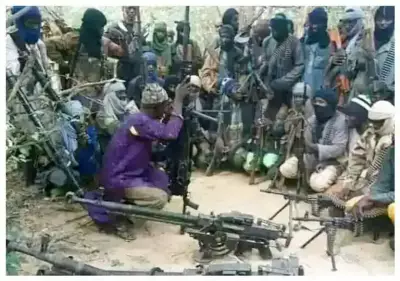
ADC Chieftain Proposes Comprehensive Framework to Combat Banditry in Kwara
Prof Abdulmumin Yinka Ajia, a prominent chieftain of the African Democratic Congress (ADC), has introduced a detailed and practical framework designed to immediately secure, protect lives, and restore lasting stability and peace in Kwara State, particularly in communities severely affected by banditry. The United Kingdom-based lecturer, over the weekend, formally named this initiative the Kwara Rural Security and Recovery Compact. He presented the compact to journalists in Ilorin, Kwara State, outlining its foundation on six critical pillars that aim to secure the state's movement corridors effectively.
Securing Movement Corridors as a First Line of Defense
According to Prof Ajia, bandits do not materialize out of thin air; they utilize predictable routes such as forest edges, river crossings, feeder roads, and border belts. He strongly urged the Kwara State government to identify these corridors and establish a continuous, rather than temporary, dominance over them. "We will establish forward security presence in vulnerable entry points across Kaiama, Baruten, Edu, Patigi, Ifelodun, and exposed parts of Kwara South," Ajia disclosed. He emphasized that security measures must proactively intercept criminals before they reach villages, not merely react after incidents occur.
Implementing Cluster Defense for Rural Communities
On the second pillar of the compact, Ajia advocated for the defense of rural communities through a Cluster Defense strategy. He highlighted that one of the greatest vulnerabilities facing villages today is their isolation. "Communities are scattered, support is far away, and response time is slow. We must reorganise vulnerable settlements into protected security clusters," he noted. Each cluster would be equipped with a rapid response point, a communications hub, emergency medical support, and evacuation coordination capacity. Ajia stressed that this approach ensures every cluster knows exactly who to contact and what actions to take, reinforcing government presence to combat fear where the state has been absent.

Reforming Forest and Frontier Protection Units
Ajia also called for the reformation of Forest and Frontier Protection Units, arguing that forests should not remain ungoverned spaces. "Our forest guards must never again be placed in danger without structure, training, or protection," he said. He proposed professionalizing these units by providing proper training, equipment, and integration with formal security agencies, transforming them into early-warning systems rather than sacrificial deployments.
Dismantling Kidnapping Networks Systematically
Prof Ajia pointed out that kidnapping has evolved into an organized business model reliant on informants, suppliers, transport, helpers, negotiators, cash channels, and safe houses. To counter this, he recommended establishing a dedicated Kidnap Disruption Coordination Cell. This cell would track patterns across cases and systematically dismantle the support systems that enable kidnapping to thrive. "Criminals should never feel that Kwara State is a safe operating environment," he asserted, emphasizing the need for a strategic, system-wide approach rather than addressing incidents piecemeal.
Protecting Rural Livelihoods and Farming Activities
In his final pillar, Ajia focused on securing farming and protecting rural livelihoods. He warned that when farmers abandon their land, insecurity spreads; when markets close, criminal influence grows; and when villages empty, fear replaces governance. He proposed launching a Secure Farming Initiative that guarantees protected access to farms during planting and harvest periods, supports escorted movement where necessary, and reopens feeder roads to restore economic stability and community resilience.