The Muslim Rights Concern (MURIC) has issued a strong warning against the return of religious labeling of violent acts and terrorism by the Nigerian media. The organization specifically cautioned an Ibadan-based broadcaster who repeatedly described the kidnappers of Oriire Local Government schoolchildren as Islamic jihadists.
Broadcaster's Remarks Spark Controversy
The broadcaster, Edmund Obilo, was said to have referred to the kidnappers as Islamic jihadists during his programme, State Affairs. MURIC advised Obilo and others in similar positions to seek adequate knowledge before speaking on issues they may not fully understand.
MURIC's Official Response
Speaking through its Secretary, Mallam Ibrahim Agunbiade, the Oyo state chapter of MURIC reacted in a statement sent to Legit.ng on Friday, May 29. Agunbiade expressed deep concern over the dangerous direction of the discussion surrounding insecurity in Oyo State and parts of the South-West region.

"While listening to State Affairs programme anchored by Edmund Obilo, I became deeply concerned by the dangerous direction of the discussion surrounding insecurity in Oyo State and parts of the South-West region," Agunbiade said.
"During the programme, references were repeatedly made to kidnappers and criminal gangs operating in parts of Oyo State as 'Islamic jihadists', with claims that they have now invaded the South-West in a bid to conquer the region and establish dominance."
He described such sweeping and emotionally charged narratives as misleading and capable of creating dangerous religious tension in an already fragile society.
Condemnation of Kidnappings
Condemning the attacks in the Oriire Local Government axis, where teachers and pupils were abducted from schools, Agunbiade described the incident as tragic and one that every responsible citizen should oppose.
"It is indeed tragic and condemnable. Every responsible citizen must rise against such barbaric acts. However, the question that must be asked is this: since when did kidnapping schoolchildren become an Islamic mission?" he asked.
Religious Neutrality in Criminality
MURIC expressed concern that abducting innocent teachers and pupils has, in the eyes of some commentators, become associated with religion. Agunbiade described such narratives as irresponsible and intellectually dishonest.
"It is irresponsible and intellectually dishonest to automatically label every violent criminal activity involving suspected Fulani bandits or kidnappers as 'Islamic jihadist'. Criminality should remain criminality. Evil should be called evil without dragging religion into matters where religion itself clearly stands opposed to such actions," he stated.
The group also noted that many victims of the attacks are Muslims, a reality it said is often ignored in public discussions.
"What makes this even more disturbing is that many of the victims of these attacks are themselves Muslims. Among the kidnapped pupils and affected families are Muslims whose lives have been shattered by these same criminals. So, how does one logically conclude that these kidnappers are fighting an 'Islamic cause' while terrorising Muslim communities and targeting Muslim children?" Agunbiade questioned.
Call for Facts Over Stereotyping
While acknowledging the rising insecurity in Oyo and other parts of the South-West, MURIC insisted that the situation should not be framed as a religious struggle.
"Nobody denies the seriousness of insecurity in the South-West. Communities are under pressure. Farmers are afraid. Travellers are anxious. Parents are worried. But solving insecurity requires facts, intelligence gathering, effective policing, and sincere governance, not religious stereotyping," the group argued.
MURIC stated that voices promoting peace, unity, and responsibility deserve greater attention in public discourse. According to the group, media narratives that lean toward religious profiling rather than objective analysis risk inflaming ethnic and religious suspicion among citizens who have coexisted peacefully for decades.
Media's Role in De-escalating Conflicts
Agunbiade stressed that the role of the media during periods of insecurity is not merely to sensationalise fear or promote divisive assumptions.

"Journalism carries a moral burden. Broadcasters and public commentators must exercise caution in their choice of words, especially in a multi-religious and multi-ethnic society like Nigeria. Words are powerful," he warned.
He urged media practitioners to avoid narratives that could trigger disunity, poison public perception, and sow hatred among innocent people.
"We must avoid turning a security crisis into a religious war narrative. Once criminality is wrongly framed as a battle between religions, the real perpetrators hide behind the confusion while innocent citizens suffer discrimination and hostility," Agunbiade concluded.
Background on Oyo Kidnappings
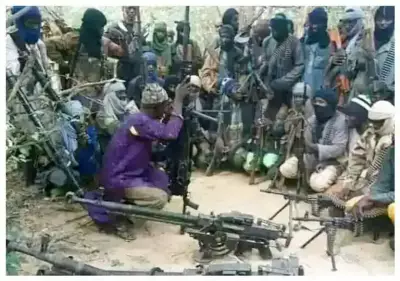
Previously, the Defence Headquarters clarified earlier statements on insecurity in the South West and linked the recent abduction of schoolchildren in Oyo state to the JAS terrorist group. The military explained that intelligence reports indicated the group had been displaced from other regions and was attempting to regroup in parts of the South West, including areas where the Oyo school attack occurred.