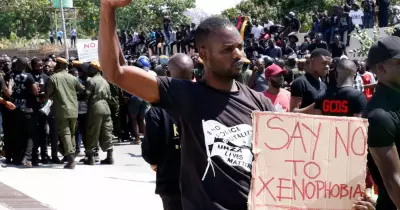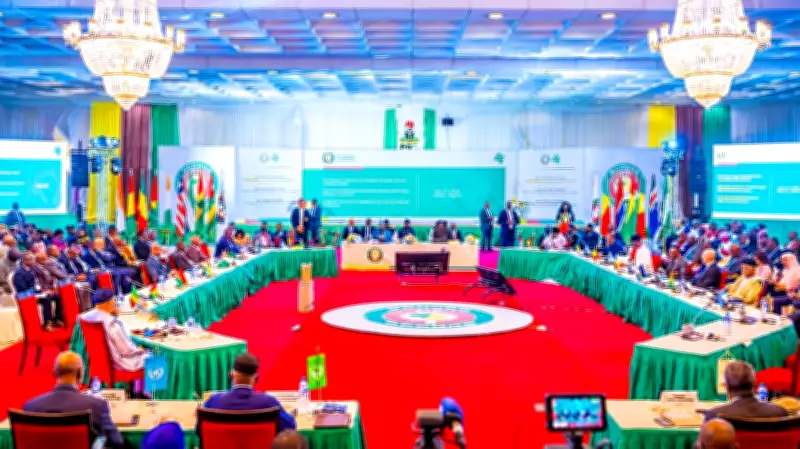
The ECOWAS Parliament, concerned by persistent xenophobic attacks in South Africa targeting non-citizens, has tasked its committee on Political Affairs to investigate the matter and present proposals for adoption. This directive was issued during the ongoing First Ordinary Session of the Parliament for the year.
Focus on Sahel Violence
The regional legislature also instructed the committee to examine violent extremism in the Sahel, particularly in Mali and Burkina Faso. Despite these countries withdrawing from ECOWAS, parliamentarians warned that their proximity to member states poses a security threat. Failure to collaborate with Mali and Burkina Faso to combat insecurity could negatively impact the bloc, especially neighboring countries.
Call for Ratification of AU Protocol
The Parliament called for the ratification of the African Union Protocol on Free Movement of People, criticizing the continental body for not addressing the situation adequately. On xenophobia, it urged member states to summon South African High Commissioners to protest the killings and harassment, expressing disappointment that South Africa has forgotten the support it received from other African nations during its struggle against apartheid.

“We stood by them in the fight against apartheid. It is disappointing that the same country we all supported has turned around to harass citizens of the same countries that helped them. This is something we have to discuss,” parliamentarians stated.
Deputy Speaker's Presentation
Third Deputy Speaker Alexander Kwamena Afenyo-Markins, in a presentation titled 'Accountability, Justice, Free Movement and Regional Solidarity,' emphasized that the killing of West African citizens, xenophobic attacks, and persistent violations of the free movement protocol require urgent attention. Citing Rule 71 of the ECOWAS Parliament, he warned that a regional community that cannot protect its citizens in transit has not earned its name.
“Ghanaians, Nigerians, Zimbabweans, Ethiopians and other African nationals have been attacked, looted, displaced and killed. The Nigerian consulate in Johannesburg has confirmed the death of two citizens this year. An Ethiopian national was shot dead at a busy intersection. Ghanaian shops have been shattered under threat,” he said.
He noted that vigilante groups have stopped people outside hospitals and schools, and footage of foreign nationals being beaten and verbally assaulted has circulated widely. Ghana's foreign minister summoned South African envoys over an incident where a Ghanaian legal resident was told to leave and fix his country. Nigeria similarly summoned South Africa's envoy in Abuja, stressing that the situation is deteriorating.
Critique of South African Government Response
Afenyo-Markins argued that while the South African government has warned against citizens taking the law into their own hands, “words delivered from a ceremonial platform do not address a single perpetrator.” He added that condemnations, however eloquent, do not bring attackers to justice. He criticized President Cyril Ramaphosa's Freedom Day speech, which described African nationals as guests whose welcome is conditioned on respectful behavior, stating that such language provides militant groups with justification for their actions.
“A government cannot simultaneously condemn mob justice and deploy the language that mobs use to justify their actions,” he said.
Demands for Action
The Parliament insisted that South Africa must move from speeches to action. The Police Service, National Prosecuting Authority, and the Independent Police Investigating Directorate must investigate every documented incident. Perpetrators, many of whose faces are known, must be identified, arrested, charged, and prosecuted without bail, selectivity, or impunity.
“South Africa was liberated by African solidarity. Frontline states paid enormous costs—economic, political, and military—to bring apartheid to its knees. West African nationals stood with the liberation movement for decades. To repay their solidarity with mob violence against African nationals is a betrayal, not only of the victims, but of every African who sacrificed so that South Africa could be free,” Afenyo-Markins stated.

Recommendations
He recommended establishing a special committee on the safety and protection of ECOWAS citizens abroad; passing a resolution on the African Union movement protocol rights; developing a West African parliamentary action plan on free movement and border governance; and transmitting a formal statement of deep concern to the South African Parliament, its government, and the African Commission on Human Rights and Freedom.