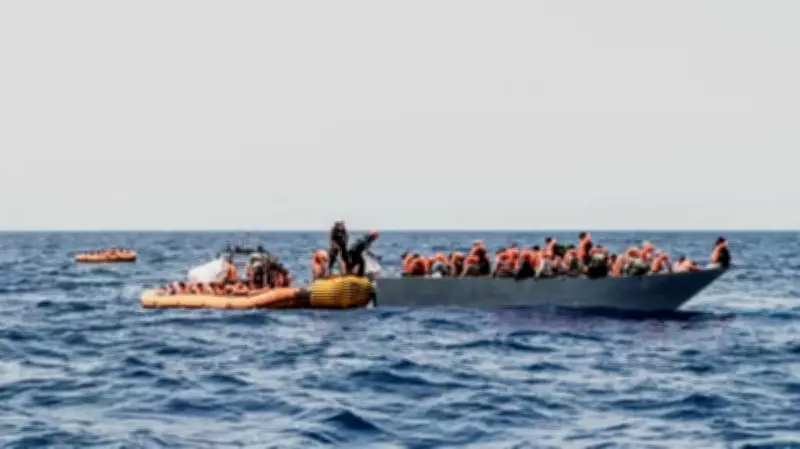
The United Nations International Organisation for Migration (IOM) has rescued more than 67,000 stranded Nigerian migrants and empowered no fewer than 30,000 returnees since 2017. This was disclosed by the IOM project assistant on awareness raising, Fatima Adeyemi, at a three-day migration reporting workshop held yesterday in Lagos.
Workshop Focuses on Ethical Reporting
The journalists' training, themed 'From Headlines to Impact: A Capacity Building on Ethical and Data-Driven Migration Reporting in Nigeria,' aimed to equip Nigerian journalists with the knowledge and skills necessary for effective migration reporting. Adeyemi emphasized that IOM is committed to driving solutions to displacements.
On migrant protection, Adeyemi stated that the IOM has rescued over 67,000 stranded Nigerian migrants through its Assisted Voluntary Return and Reintegration programme since 2017. So far, over 30,000 of those returned migrants have received psychological, social, and economic integration-related support.

IOM's Mission and Initiatives
'Now, as an organisation, our major mission is that we act with our partners to drive solutions to displacements, save lives, take people off the roads and make sure that they are passed through to regular evaluation. Down south here, we focus more on facilitated migration and immigration management. We also have free movements and migration where we work with entities such as ECOWAS to ensure that immigration issues are followed through legally,' Ms Adeyemi said.
According to her, IOM is working to sensitise more Nigerians to the proper ways to migrate. 'We are working with government secondary schools, including unity schools and military schools, as well as schools close to borders, to raise awareness on illegal migration. We want schoolchildren to be sensitised before they are brainwashed to migrate illegally. We are sensitising the children to how to migrate properly.'
She added that in Nigeria, the Migration Resource Centre in the Federal Ministry of Labour and Employment educates potential migrants and verifies information about their destinations. 'Not many people are aware of the services that IOM offers migrants, and that is where the media comes in to help increase this sensitisation drive,' she said.
Support for Stranded Migrants
Adeyemi noted that IOM is working with the National Commission for Refugees to develop a national referral mechanism for stranded migrants. 'If someone finds himself stranded, he should locate the IOM office or the Nigerian Embassy in that country. We focus mainly on ensuring their safe return. We will also try to improve the integration of returned migrants,' she said.
IOM has also urged Nigerian journalists to shift from sensational headlines to human-centric, data-driven journalism to restore dignity and protection to displaced persons and returnees. The IOM Head of Office in Lagos, Ali Ibrahim, noted that public discourse surrounding migration is often clouded by controversies, crises, and stereotypes, stressing that the media must recognise the human faces behind the statistics. According to him, migration is many things to many people, but in reality, it is about people.